


Fiche participant :
Nom : Corbari
Prénom : Laure
Liste des participations aux campagnes accessibles [+] [-]
- ATIMO VATAE
- Fort-Dauphin (27/04/2010 - 19/05/2010)
- Collecte - Tri (Carcinologie, Muséum national d'Histoire naturelle)
- BIOMAGLO
- LEG 1 (22/01/2017 - 30/01/2017)
- Chef de mission (Carcinologie, Muséum national d'Histoire naturelle)
- LEG 2 (02/02/2017 - 09/02/2017)
- Chef de mission (Carcinologie, Muséum national d'Histoire naturelle)
- BIOPAPUA
- Leg 2 (22/09/2010 - 02/10/2010)
- Chef de mission (Carcinologie, bois coulés, Muséum national d'Histoire naturelle)
- CORSICABENTHOS 1
- CAMPAGNE (06/05/2019 - 24/05/2019)
- Tri - Photo (Carcinologie, Muséum national d'Histoire naturelle)
- EXBODI
- Leg 2 (12/09/2011 - 29/09/2011)
- Chef de mission (Carcinologie, bois coulés, Muséum national d'Histoire naturelle)
- GOLFE DU LION
- (Carcinologie, Muséum national d'Histoire naturelle)
- GUYANE 2014
- (13/07/2014 - 17/08/2014)
- Chef de mission (Carcinologie, Muséum national d'Histoire naturelle)
- KANADEEP 2
- Leg.2 (22/09/2019 - 01/10/2019)
- Tri et identification des crustacés (Biologie, Muséum national d'Histoire naturelle)
- KARUBENTHOS 2
- Leg 1 (07/06/2015 - 16/06/2015)
- Chef de mission ( Muséum national d'Histoire naturelle)
- KARUBENTHOS 2012
- Première partie (02/05/2012 - 28/05/2012)
- Collecte - Tri - Photo (Carcinologie, Muséum national d'Histoire naturelle)
- KARUBENTHOS 3
- Les Saintes (26/09/2024 - 12/10/2024)
- Coordinatrice scientifique - Photographie (Carcinologie, Muséum national d'Histoire naturelle)
- Marie-Galante (16/10/2024 - 30/10/2024)
- Coordinatrice scientifique - Photographie (Carcinologie, Muséum national d'Histoire naturelle)
- La Désirade (01/11/2024 - 11/11/2024)
- Coordinatrice scientifique - Photographie (Carcinologie, Muséum national d'Histoire naturelle)
- KAVIENG 2014
- Leg 2 (Profond) (27/08/2014 - 07/09/2014)
- Tri, photo Crustacés ( Muséum national d'Histoire naturelle)
- MADEEP
- Leg 1 (06/04/2014 - 18/04/2014)
- Chef de mission (Carcinologie, Muséum national d'Histoire naturelle)
- Leg 2 (20/04/2014 - 08/05/2014)
- Chef de mission (Carcinologie, Muséum national d'Histoire naturelle)
- MADIBENTHOS
- Responsable tri des crustacés et photo (Carcinologie, Muséum national d'Histoire naturelle)
- MAINBAZA
- (09/04/2009 - 17/04/2009)
- Collecte - Tri (Carcinologie, Muséum national d'Histoire naturelle)
- PAPUA NIUGINI
- Shore-based sampling (05/11/2012 - 14/12/2012)
- ( Muséum national d'Histoire naturelle)
- Leg 3. Quantitative sampling and deep‐sea work (26/11/2012 - 02/12/2012)
- ( Muséum national d'Histoire naturelle)
- Leg 5. Deep‐water dredging/trawling (16/12/2012 - 26/12/2012)
- ( Muséum national d'Histoire naturelle)
- SAYA
- Responsable Benthos, Coordination opérations de pêche (Crustacés, Muséum national d'Histoire naturelle)
- SPANBIOS
- Leg 1 (27/06/2021 - 12/07/2021)
- 27/06/2021 - 12/07/2021 Tri et fixation des organismes (Biologie des crustacés, Muséum national d'Histoire naturelle)
- Leg 2 (14/07/2021 - 30/07/2021)
- 14/07/2021 - 30/07/2021 Tri et fixation des organismes (Biologie des crustacés, Muséum national d'Histoire naturelle)
- TAIWAN 2013
- Ocean Researcher 3 (20/05/2013 - 21/05/2013)
- (Carcinologie, Muséum national d'Histoire naturelle)
Contributions taxonomiques [+] [-]
| Etat doc | Rang contributeur | Date détermination | Classe | Ordre | Famille | Genre | Espèce | Libellé taxonomique |
|---|---|---|---|---|---|---|---|---|
| a | 20/02/2013 | Malacostraca | Decapoda | Inachidae | Gen. | sp. | ||
| a | 21/02/2013 | Malacostraca | Decapoda | Inachidae | Cyrtomaia | sp. | ||
| a | 21/02/2013 | Malacostraca | Decapoda | Munidopsidae | Gen. | sp. | ||
| a | 21/02/2013 | Malacostraca | Decapoda | Munidopsidae | Munidopsis | sp. | ||
| a | 21/02/2013 | Malacostraca | Decapoda | Munidopsidae | Munidopsis | spp. | ||
| a | 21/02/2013 | Malacostraca | Decapoda | Pylochelidae | Gen. | sp. | ||
| a | 21/02/2013 | Malacostraca | Decapoda | Raninidae | Gen. | sp. | ||
| a | 09/04/2013 | Malacostraca | Decapoda | Fam. | Gen. | sp. | ||
| a | 09/04/2013 | Malacostraca | Decapoda | Portunidae | Gen. | sp. |
Documents [+] [-]












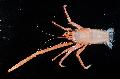


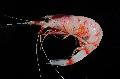


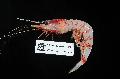


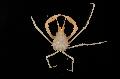

























































































































































































































Bibliographie (53) [+] [-]
Exporter les bibliographies
-
Ahyong S.T. 2013. Stomatopoda collected primarily by the Philippine AURORA expedition (Crustacea, Squilloidea), in Ahyong S.T., Chan T., Corbari L. & Ng P.K.(Eds), Tropical Deep-Sea Benthos 27. Mémoires du Muséum national d'Histoire naturelle 204:85-106, ISBN:978-2-85653-692-6
Résumé [+] [-]Stomatopod Crustacea of the superfamily Squilloidea collected primarily by the Philippine AURORA expedition are reported. One family, nine genera and 15 species are reported, of which one genus and two species are new to science. The new genus, Triasquilla n. gen., comprising two new species, belongs to the “Meiosquilla” group within Squillidae and is most closely allied to Schmittius Manning, 1972, from the eastern Pacific and Squilloides Manning, 1968, from the Indo-West Pacific. Anchisquilla fasciaticauda Liu & Wang, 1998, Cloridina chlorida (Brooks, 1886), Harpiosquilla sinensis Liu & Wang, 1998, Neclorida miersi (Manning, 1968) and Quollastria ornata (Manning, 1971) are reported from the Philippines for the first time. The study is supplemented by additional material of the new species described herein collected from various Indo-West Pacific localities by other deep-sea expeditions to the Philippines, Solomon Islands, New Caledonia, Vanuatu, Fiji, Tonga and Western Australia.
Campagnes accessibles citées (9) [+] [-]AURORA 2007, BATHUS 4, BORDAU 1, BORDAU 2, MUSORSTOM 10, MUSORSTOM 8, PANGLAO 2005, SALOMON 1, SANTO 2006
Codes des collections associés: IU (Crustacés) -
Anker A. & Corbari L. 2020. A new deep-water palaemonid shrimp genus and species from the French Antilles, with a new record of Periclimenes milleri Bruce, 1986 (Decapoda: Caridea). Zootaxa 4834(3): 407-424. DOI:10.11646/zootaxa.4834.3.4
Résumé [+] [-]A new genus and species in the caridean shrimp family Palaemonidae is described based on three type specimens collected at a depth range of 208–385 m off Guadeloupe, French Antilles. Zoukaris festivus gen. et sp. nov. shares many characters with several western Atlantic deep-water species currently assigned to Periclimenes Costa, 1844, as well as with the monotypic western Atlantic genus Diapontonia Bruce, 1986 and the Indo-West Pacific genus Echinopericlimenes Marin & Chan, 2014. Zoukaris gen. nov. can be separated from all of them by a unique combination of morphological features, especially the configuration of the dactylus of the ambulatory pereiopods. In addition, Periclimenes milleri Bruce, 1986 is recorded from the French Antilles based on a single specimen, also from Guadeloupe; its colour pattern is illustrated for the first time.
Campagnes accessibles citées (1) [+] [-]
Codes des collections associés: IU (Crustacés) -
Aznar-Cormano L., Brisset J., Chan T., Corbari L., Puillandre N., Utgé J., Zbinden M., Zuccon D. & Samadi S. 2015. An improved taxonomic sampling is a necessary but not sufficient condition for resolving inter-families relationships in Caridean decapods. Genetica 143(2): 195-205. DOI:10.1007/s10709-014-9807-0
Résumé [+] [-]During the past decade, a large number of multi-gene analyses aimed at resolving the phylogeneticrelationships within Decapoda. However relationships among families, and even among sub-families, remain poorly defined. Most analyses used an incomplete and opportunistic sampling of species, but also an incomplete and opportunistic gene selection among those available for Decapoda. Here we test in the Caridea if improving the taxonomic coverage following the hierarchical scheme of the classification, as it is currently accepted, provides a better phylogenetic resolution for the inter-families relationships. The rich collections of the Muse´um National d’Histoire Naturelle de Paris are used for sampling as far as possible at least two species of two different genera for each family or subfamily. All potential markers are tested over this sampling. For some coding genes the amplification success varies greatly among taxa and the phylogenetic signal is highly saturated. This result probably explains the taxon-heterogeneity among previously published studies. The analysis is thus restricted to the genes homogeneously amplified over the whole sampling. Thanks to the taxonomic sampling scheme the monophyly of most families is confirmed. However the genes commonly used in Decapoda appear non-adapted for clarifying inter-families relationships, which remain poorly resolved. Genome-wide analyses, like transcriptome-based exon capture facilitated by the new generation sequencing methods might provide a sounder approach to resolve deep and rapid radiations like the Caridea.
Campagnes accessibles citées (39) [+] [-]Restreint, ATIMO VATAE, Restreint, Restreint, BATHUS 1, BATHUS 3, BATHUS 4, BENTHAUS, BERYX 11, BERYX 2, BIOCAL, Restreint, BIOPAPUA, Restreint, Restreint, Restreint, Restreint, Restreint, Restreint, HALIPRO 1, HALIPRO 2, Restreint, KARUBAR, Restreint, LAGON, MAINBAZA, MD08 (BENTHOS), MD20 (SAFARI), MIRIKY, MUSORSTOM 2, MUSORSTOM 3, MUSORSTOM 5, MUSORSTOM 9, NORFOLK 1, NORFOLK 2, SALOMON 2, SALOMONBOA 3, SANTO 2006, SMCB
Codes des collections associés: IU (Crustacés) -
Burukovsky R.N. 2013. Shrimps of the family Nematocarcinidae Smith, 1884 (Crustacea, Decapoda, Caridea) from Taiwan and Philippines collected by the TAIWAN, PANGLAO 2005 and AURORA expeditions in the western Pacific, in Ahyong S.T., Chan T., Corbari L. & Ng P.K.(Eds), Tropical Deep-Sea Benthos 27. Mémoires du Muséum national d'Histoire naturelle 204:155-189, ISBN:978-2-85653-692-6
Résumé [+] [-]During the recent Taiwan TAIWAN and the Philippines PANGLAO 2005 and AURORA deep-sea expeditions, many specimens of nematocarcinid shrimp were collected. Altogether three genera and 13 species are identified: Nigmatullinus acanthitelsonis (Pequegnat, 1970), Segonzackomaius altus (Bate, 1888), Nematocarcinus chacei Burukovsky, 2002, N. combensis Burukovsky, 2000, N. crosnieri Burukovsky, 2000, N. gracilis Bate, 1888, N. productus Bate, 1888, N. rectirostris Burukovsky, 1991, N. richeri Burukovsky, 2000, N. subtegulisfactus Burukovsky, 2000, N. subtilis Burukovsky, 2000, N. tenuipes Bate, 1888 and N. tenuirostris Bate, 1888. Amongst them, S. altus, N. chacei and N. crosnieri are the second records since their original descriptions. Moreover, two genera and 11 species are new records for Taiwan while two species are new Philippine records. Diagnoses for the family, subfamilies, and genera and a key to all species of Nematocarcinus A. Milne-Edwards, 1881 are given. Colour photographs of 10 species are also provided. The studied area was subdivided into northern and southern subareas. The northern area includes the waters around Taiwan (21°18’-25°22’N and 117°17’-123°01’E), and the southern area the waters of the Philippines (08°33’-16°06’N and 121°30’-124°10’E). Five species occur in both subareas. A comparison of the present data with the known data on the nematocarcinid shrimp fauna of the Indo-Malay area or East Indies Triangle (i.e. the centre of species diversity of shrimps of family Nematocarcinidae) revealed that the area between Taiwan and the northern Philippines is an ecotone, with a transitional nematocarcinid shrimp fauna between the fauna of the East Indies Triangle and the typical Indo-West-Pacific fauna.
Campagnes accessibles citées (5) [+] [-]
Codes des collections associés: IU (Crustacés) -
Castelin M., Delavenne J., Brisset J., Chambart C., Corbari L., Keszler L., Lozouet P., Olu K., Poncet L., Puillandre N. & Samadi S. 2019. Exploration et étude de la biodiversité benthique profonde de Mayotte et des îles éparses. , 128 pp.
Campagnes accessibles citées (6) [+] [-] -
Castro P. 2013. Brachyuran crabs (Crustacea, Brachyura: Crossotonotidae, Ethusidae, Euryplacidae, Goneplacidae, Latreilliidae, Palicidae, Tetraliidae, Trapeziidae) of the MAINBAZA, MIRIKI, and ATIMO VATAE expeditions to the Mozambique Channel and Madagascar, in Ahyong S.T., Chan T.Y., Corbari L. & Ng P.K.(Eds), Tropical Deep-Sea Benthos 27. Mémoires du Muséum national d'Histoire naturelle 204:437-466, ISBN:978-2-85653-692-6
Résumé [+] [-]Material, mostly deep-water, belonging to eight families of brachyuran crabs are listed from the MAINBAZA, MIRIKI, and ATIMO VATAE expeditions to the Mozambique Channel and northwestern and southern Madagascar. A new species of Ethusa Roux, 1830 (Ethusidae), unique for its vivid colouration and collection in shallow water 13-22 m deep, is described from southern Madagascar. Sphenomerides trapezoides (Wood-Mason & Alcock, 1891) (Trapeziidae) is for the first time recorded from a host, a sponge, and the presence of mucus-gathering setae are for the first time demonstrated in this rarely collected species. A neotype for Dorippe sexdentata Stimpson, 1858 (Ethusidae) is designated to stabilise the taxonomy of the species. The male and the vulva of Ethusa machaera Castro, 2005, and the vulva of E. sexdentata (Stimpson, 1858) are described for the first time. Five species are new records for Madagascar: Crossotonotus spinipes (De Man, 1888) (Crossotonotidae); Carcinoplax ischurodous (Stebbing, 1923), Goneplax clevai Guinot & Castro, 2007, and Ommatocarcinus pulcher Barnard, 1950 (Goneplacidae); and Pseudopalicus sexlobatus (Kensley, 1969) (Palicidae); while Ethusina somalica (Doflein, 1904) (Ethusidae) is a new record for the southwestern Indian Ocean.
Campagnes accessibles citées (3) [+] [-]
Codes des collections associés: IU (Crustacés) -
Chan B.K., Chen H.N. & Yu J.H.Y. 2013. New species of barnacles associated with antipatharian corals of the genus Oxynaspis Darwin, 1852 (Crustacea, Cirripedia, Lepadiformes) from the Philippines and Taiwan, in Ahyong S.T., Chan T.Y., Corbari L. & Ng P.K.(Eds), Tropical Deep-Sea Benthos 27. Mémoires du Muséum national d'Histoire naturelle 204:67-84, ISBN:978-2-85653-692-6
Résumé [+] [-]Two new Oxynaspis species associated with antipatharian corals are described from the AURORA expedition in the Philippines and from Taiwan waters. Oxynaspis auroraensis n. sp. was collected from the Philippines at more than 500 m depth and belongs to the fully armored group of Oxynaspis. The umbo of the carina of O. auroraensis n. sp. is located in a proximal position with the carinal distal arm about 3.5 times longer than the basal arm. Such a position is diagnostic, distinguishing this species from all previously described Oxynaspis species. Oxynaspis biradius n. sp. was collected from Taiwanese waters at 20-30 m depth and belongs to the reduced scutum group of Oxynaspis. The morphology of O. biradius n. sp. is close to that of O. joankovenae Van Syoc & Delkelboum, 2011, but differs in having two distinct white rays on the scutum and a more pointed tergal spur. From molecular analysis in the sequence divergence of the 12S and COI region, O. auroraensis n. sp. and O. biradius n. sp. form distinct monophyletic clades and the interspecific divergence suggests that these two species are distinct.
Campagnes accessibles citées (1) [+] [-]
Codes des collections associés: IU (Crustacés) -
Chan B.K., Corbari L., Rodriguez Moreno P.A. & Jones D.S. 2014. Two new deep-sea stalked barnacles, Arcoscalpellum epeeum sp. nov. and Gymnoscalpellum indopacificum sp. nov., from the Coral Sea, with descriptions of the penis in Gymnoscalpellum dwarf males. Zootaxa 3866(2): 261-276. DOI:10.11646/zootaxa.3866.2.5
Résumé [+] [-]The present study describes a new species of Arcoscalpellum Hoek, 1907, and a new species of Gymnoscalpellum Newman & Ross, 1971, collected by deep-sea expeditions led by the Muséum national d’Histoire naturelle (Paris) in the Coral Sea off New Caledonia, Papua New Guinea (PNG), the Solomon Islands and Vanuatu. Arcoscalpellum epeeum sp. Nov. Differs from all described species of Arcoscalpellum by the presence of a long, sharp, sword-shaped carina, which extends beyond the apices of the terga by 1/3 to 1/4 of their length. The species is dioecious, with large females and dwarf males that are sac-like, lack shell plates and are housed in paired receptacles at the inner edges of the scutal plates. Arcoscalpellum epeeum sp. Nov. Was collected in the waters of New Caledonia and Vanuatu. Gymnoscalpellum indopacificum sp. Nov. Differs from the six currently described species of Gymnoscalpellum by having a very small inframedian latus and a branched upper latus. The species is dioecious, with large females and dwarf males, the latter composed of 4 shell plates and housed in paired receptacles at the inner edges of the scutal plates. The penis of the dwarf males of G. indopacificum sp. Nov. Is about 0.8 of the total length of the male and has five side branches extending out along its length. Gymnoscalpellum indopacificum sp. Nov. Is distributed in the waters of Papua New Guinea, the Solomon Islands and Vanuatu, and represents the first record of this genus in the Indo-Pacific region.
Campagnes accessibles citées (15) [+] [-]BATHUS 2, BIOCAL, BIOPAPUA, BOA1, EBISCO, MUSORSTOM 4, MUSORSTOM 5, MUSORSTOM 6, MUSORSTOM 8, NORFOLK 1, NORFOLK 2, SALOMON 1, SMIB 2, SMIB 4, SMIB 8
Codes des collections associés: IU (Crustacés) -
Chan B.K., Chen H.N., Rodriguez Moreno P.A. & Corbari L. 2016. Diversity and biogeography of the little known deep-sea barnacles of the genus Waikalasma Buckeridge, 1983 (Balanomorpha: Chionelasmatoidea) in the Southwest Pacific, with description of a new species. Journal of Natural History 50(47-48): 2961-2984. DOI:10.1080/00222933.2016.1226445
Campagnes accessibles citées (6) [+] [-]
Codes des collections associés: IU (Crustacés) -
Chan B.K., Corbari L., Rodriguez Moreno P.A. & Tsang L.M. 2017. Molecular phylogeny of the lower acorn barnacle families (Bathylasmatidae, Chionelasmatidae, Pachylasmatidae and Waikalasmatidae)(Cirripedia: Balanomorpha) with evidence for revisions in family classification. Zoological Journal of the Linnean Society 180: 542-555
Campagnes accessibles citées (16) [+] [-]ATIMO VATAE, BIOPAPUA, BORDAU 1, BORDAU 2, EBISCO, EXBODI, MUSORSTOM 10, MUSORSTOM 8, NORFOLK 1, NORFOLK 2, SALOMON 1, SALOMON 2, SANTO 2006, SMIB 3, SMIB 5, TARASOC
Codes des collections associés: IU (Crustacés) -
Chan T., Ma K.Y. & Chu K.H. 2013. The deep-sea spiny lobster genus Puerulus Ortmann, 1897 (Crustacea, Decapoda, Palinuridae), with descriptions of five new species, in Ahyong S.T., Chan T., Corbari L. & Ng P.K.(Eds), Tropical Deep-Sea Benthos 27. Mémoires du Muséum national d'Histoire naturelle 204:191-230, ISBN:978-2-85653-692-6
Résumé [+] [-]Recent French deep-sea expeditions in the Indo-West Pacific resulted in the collection of abundant material of the deep-sea lobster genus Puerulus Ortmann, 1897 (Palinuridae). Difficulties in identification necessitated a generic revision and as a result, five new species are described, all of which are similar to P. angulatus (Bate, 1888). Puerulus angulatus was thought to have a wide distribution from eastern Africa to Marquesas Islands, but is now restricted to the western Pacific, from Japan to Australia. Of the five new species, P. gibbosus n. sp. is found in eastern Africa, P. mesodontus n. sp. from Japan to Fiji, P. richeri n. sp. from the New Caledonia to Marquesas Islands, while P. sericus n. sp. and P. quadridentis n. sp. mainly occur around New Caledonia. Of the other three previously described species, the distribution of P. velutinus Holthuis, 1963, is extended to Fiji, while P. sewelli Ramadan, 1938, and P. carinatus Borradaile, 1910, are still only known from the northern and western parts of the Indian Ocean, respectively. COI gene sequence differences support the morphological species distinctions.
Campagnes accessibles citées (54) [+] [-]AURORA 2007, AZTEQUE, BATHUS 1, BATHUS 2, BATHUS 3, BATHUS 4, BENTHEDI, BERYX 11, BERYX 2, BIOCAL, BIOPAPUA, BOA0, BOA1, BORDAU 1, BORDAU 2, CHALCAL 1, CHALCAL 2, Restreint, EBISCO, EXBODI, HALIPRO 1, KARUBAR, LITHIST, MAINBAZA, Restreint, MIRIKY, MUSORSTOM 1, MUSORSTOM 10, MUSORSTOM 2, MUSORSTOM 3, MUSORSTOM 4, MUSORSTOM 5, MUSORSTOM 6, MUSORSTOM 7, MUSORSTOM 8, MUSORSTOM 9, NORFOLK 1, NORFOLK 2, PALEO-SURPRISE, PANGLAO 2005, SALOMON 1, SALOMON 2, SALOMONBOA 3, SANTO 2006, SMCB, SMIB 1, SMIB 2, SMIB 4, SMIB 8, TAIWAN 2001, TARASOC, TERRASSES, VAUBAN 1978-1979, VOLSMAR
Codes des collections associés: IU (Crustacés) -
Corbari L. & Sorbe J.C. 2015. Papuadocus blodiwai gen. nov., sp. nov. (Crustacea: Amphipoda: Maeridae); a new bathyal species associated with sunken wood in the Bismarck Sea. Zootaxa 3914(4): 406-420. DOI:10.11646/zootaxa.3914.4.2
Campagnes accessibles citées (1) [+] [-]
Codes des collections associés: IU (Crustacés) -
Corbari L. & Sorbe J.C. 2017. First observations of the behaviour of the deep-sea amphipod Dulichiopsis dianae sp. nov. (Senticaudata, Dulichiidae) in the TAG hydrothermal vent field (Mid-Atlantic Ridge). Marine Biodiversity. DOI:10.1007/s12526-017-0788-y
Campagnes accessibles citées (1) [+] [-]
Codes des collections associés: IU (Crustacés) -
Corbari L., Conand C. & Sorbe J.C. 2017. Potential symbiosis between the bathyal sea cucumber Orphnurgussp.(Elasipodida, Deimatidae) and the amphipod crustacean Adeliella sp. (Gammaridea, Lysianassoidea) in the western tropical Pacific. SPC Beche-de-mer Information Bulletin 37: 103-104
Campagnes accessibles citées (4) [+] [-]
Codes des collections associés: IU (Crustacés) -
Corbari L. & Sorbe J.C. 2018. First observations of the behaviour of the deep-sea amphipod Dulichiopsis dianae sp. nov. (Senticaudata, Dulichiidae) in the TAG hydrothermal vent field (Mid-Atlantic Ridge). Marine Biodiversity 48(1): 631-645. DOI:10.1007/s12526-017-0788-y
Résumé [+] [-]A Btiny and mysterious creature swinging on a stem^: that was the first observation of the new species Dulichiopsis dianae sp. nov. made during the remotely operated vehicle (ROV) dive devoted to the exploration of the surroundings of the vent site TAG (BICOSE cruise, 3550–3650 m). The viewing and analysis of the high-definition pictures from several dives (PL570, PL573 and PL575) corresponding to five different locations around TAG revealed that these organisms were amphipods, hung on erected and flexible masts (5–7 cm length) attached to the underlying hard substratum. Two specimens were opportunely sampled during dive PL575 (3637 m) with the suction sampler of the ROVand were identified as a new species ascribed to the genus Dulichiopsis (family Dulichiidae). The present study provides the morphological description of this new species, coupled with in situ observations of its behaviour and lifestyle in the vicinity of the TAG vent field. Taxonomic and ecological aspects of the family Dulichiidae are proposed here, as well as a review of the amphipod diversity in hydrothermal environments.
Campagnes accessibles citées (1) [+] [-]
Codes des collections associés: IU (Crustacés) -
Corbari L., Frutos I. & Sorbe J.C. 2019. Dorotea gen. nov., a new bathyal genus (Amphipoda, Eusiridae) from the Solomon Sea (Papua New Guinea). Zootaxa 4568(1): 69. DOI:10.11646/zootaxa.4568.1.4
Résumé [+] [-]A new species ascribed to a new genus of Eusiridae, Dorotea papuana gen. nov., sp. nov. is described from bathyal bottoms of the Solomon Sea (Papua New Guinea). Closely related to the genus Cleonardo, this new genus can be distinguished from most other known eusirid genera by the presence of a telson distally cleft and distinctly bilobate, of a distal spiniform process on uropod 1 peduncle and of a simple, stout and medium length dactylus on pereopods 5–7. The combination of all these characters can be considered relevant for the affiliation of this species to a new genus within Eusiridae. Due to its very close morphological affinity to Dorotea gen. nov., the bathyal sub-Antarctic species Eusiroides aberrantis Bellan-Santini & Ledoyer, 1987 cannot be maintained in the family Pontogeneiidae and it should be transferred to the family Eusiridae.
Campagnes accessibles citées (1) [+] [-]
Codes des collections associés: IU (Crustacés) -
Corbari L., Ahyong S.T. & Chan T.Y.(Eds) 2020. Deep-Sea Crustaceans from Papua New Guinea - Tropical Deep-Sea Benthos 32. Mémoires du Muséum national d'histoire naturelle 213. Publications scientifiques du Muséum national d'histoire naturelle, Paris, 481 pp. ISBN:978-2-85653-913-2
Résumé [+] [-]Tropical Deep-Sea Benthos, a continuation of Résultats des Campagnes MUSORSTOM, is a series dedicated to the inventory and description of the deep-sea fauna of the world, with special emphasis on the most extensive, yet remote and least explored, region — the Indo-West Pacific. The comprehensive series of marine expeditions undertaken by the French Muséum national d'Histoire naturelle and the Institut de Recherche pour le Développement (IRD) continue to collect many new, strange and sometimes colourful crustaceans. The present volume includes for the first-time results from recent expeditions off and Papua New Guinea. Papua New Guinea always had a special place in the heart of marine biologists. Firstly, but barely explored during the expedition of the Challenger (1875), deep-sea fauna from Papua New Guinea remained a gap of knowledge until the recent series of expeditions launched by MNHN: Biopapua (2010), Papua Niugini (2012), Madeep (2014) and Kavieng (2014). From the amazing sampling of benthic fauna, the international network of naturalists and taxonomists, federated around the Tropical Deep-Sea Benthos program, has described since 2012, more than 258 new species of molluscs, fishes, sea-spiders, corals and crustaceans. This special PNG volume comprises descriptions and new occurrences for more than 360 species including cirripeds, crabs, armoured shrimps, ghost shrimps and squat lobsters. Many are illustrated by spectacular colour images of freshly caught specimens. With 44 new species of crustaceans described in this volume, more than 300 new marine species will have been discovered around Papua New Guinea and its satellite islands
Campagnes accessibles citées (1) [+] [-]
Codes des collections associés: IM (Mollusques) -
Corbari L., Zuccon D., Sorbe J.C. & Frutos I. 2024. New bathyal amphipod species (Amphipoda: Eusiridae: Rhachotropis) from southwestern Pacific through integrative taxonomy. Organisms Diversity & Evolution 24(3): 375-416. DOI:10.1007/s13127-024-00651-0
Résumé [+] [-]Within the hyper-diverse group of the amphipods, little is known about deep-sea benthic species that still represent an unknown reservoir of species to be discovered, particularly in remote regions of the southwestern Pacific. Herein, we are describing three new deep-sea species of Rhachotropis from Papua New Guinea, Solomon archipelago, and Vanuatu using an integrative taxonomy approach, combining morphological and molecular characters with biological and ecological information. Nomenclatural comments and a key to Rhachotropis species occurring in the bathyal provinces from the southwestern Pacific are also provided. Comments on the sex ratio and fecundity of the genus are also discussed. The biogeography and distribution of the newly described species as well as congeneric species occurring in the area are discussed, and new DNA data are shedding new light on the global phylogenetic relationships (geography, depth range) of the deep-sea genus Rhachotropis.
Campagnes accessibles citées (3) [+] [-]
Codes des collections associés: IU (Crustacés) -
Hanafi-Portier M., Samadi S., Corbari L., Chan T.Y., Chen W.J., Chen J.N., Lee M.Y., Mah C., Saucède T., Borremans C. & Olu K. 2021. When Imagery and Physical Sampling Work Together: Toward an Integrative Methodology of Deep-Sea Image-Based Megafauna Identification. Frontiers in Marine Science 8: 749078. DOI:10.3389/fmars.2021.749078
Résumé [+] [-]Imagery has become a key tool for assessing deep-sea megafaunal biodiversity, historically based on physical sampling using fishing gears. Image datasets provide quantitative and repeatable estimates, small-scale spatial patterns and habitat descriptions. However, taxon identification from images is challenging and often relies on morphotypes without considering a taxonomic framework. Taxon identification is particularly challenging in regions where the fauna is poorly known and/or highly diverse. Furthermore, the efficiency of imagery and physical sampling may vary among habitat types. Here, we compared biodiversity metrics (alpha and gamma diversity, composition) based on physical sampling (dredging and trawling) and towed-camera still images (1) along the upper continental slope of Papua New Guinea (sedimented slope with wood-falls, a canyon and cold seeps), and (2) on the outer slopes of the volcanic islands of Mayotte, dominated by hard bottoms. The comparison was done on selected taxa (Pisces, Crustacea, Echinoidea, and Asteroidea), which are good candidates for identification from images. Taxonomic identification ranks obtained for the images varied among these taxa (e.g., family/order for fishes, genus for echinoderms). At these ranks, imagery provided a higher taxonomic richness for hard-bottom and complex habitats, partially explained by the poor performance of trawling on these rough substrates. For the same reason, the gamma diversity of Pisces and Crustacea was also higher from images, but no difference was observed for echinoderms. On soft bottoms, physical sampling provided higher alpha and gamma diversity for fishes and crustaceans, but these differences tended to decrease for crustaceans identified to the species/morphospecies level from images. Physical sampling and imagery were selective against some taxa (e.g., according to size or behavior), therefore providing different facets of biodiversity. In addition, specimens collected at a larger scale facilitated megafauna identification from images. Based on this complementary approach, we propose a robust methodology for image-based faunal identification relying on a taxonomic framework, from collaborative work with taxonomists. An original outcome of this collaborative work is the creation of identification keys dedicated specifically to in situ images and which take into account the state of the taxonomic knowledge for the explored sites.
Campagnes accessibles citées (9) [+] [-]
Codes des collections associés: IC (Ichtyologie), IE (Échinodermes), IK (Cnidaires), IM (Mollusques), IP (Porifères), IU (Crustacés) -
Hanafi-Portier M., Samadi S., Corbari L., Boulard M., Miramontes E., Penven P., Leroy B., Napoléon T., Jorry S.J. & Olu K. 2024. Multiscale spatial patterns and environmental drivers of seamount and island slope megafaunal assemblages along the Mozambique channel. Deep Sea Research Part I: Oceanographic Research Papers 203: 104198. DOI:10.1016/j.dsr.2023.104198
Résumé [+] [-]Seamounts are vulnerable ecosystems targeted by fishing and potentially by future mineral exploitation. Their abundance, widespread distribution, and heterogeneity of faunal and abiotic components require integrated studies at multiscale to describe spatial patterns and identify environmental drivers needed by conservation plans. There is also a lack of knowledge on seamount benthic ecosystems in some regions, such as the Indian Ocean. These gaps, in the context of Marine Protected Areas establishment in the region, have motivated the present study focusing on the Mozambique Channel Eparses islands and flat top seamounts, along a 10-degree latitude gradient. These structures are characterized by complex volcanic and carbonate geomorphologies at multiscale and are distributed along a highly dynamic turbulent ocean circulation area with large anticyclonic eddies. For the first time, we analysed, from seabed image transects obtained by towed-camera on four seamounts, and two volcanic islands - Bassas da India and Mayotte - external slopes, and from multiscale environmental data, how benthic communities respond to this high habitat heterogeneity at regional, and local scales. This study reveals high discrepancies of benthic megafauna richness, density, and beta diversity among seamounts and among slopes of the same islands. Moreover, at similar latitude, seamounts display higher densities than island slopes. The highest densities found on a seamount of the Glorieuses archipelago are explained by strong currents and flat homogeneous geomorphology. Except on this seamount, the beta diversity is high, despite the quite limited depth range explored (84–734 m) and is the highest on island slopes and Hall Bank, driven by the diversity and hardness of the substrate. Beta diversity is mainly due to taxa turnover, with high contribution of the habitat-forming sponges and cnidarians, together with a few mobile taxa. We identified from biogeographic network analysis 12 dominant faunal assemblages, displaying a patchy distribution, with variability in composition both among and within sites. Currents and primary productivity explain ~15% of the observed assemblage structure along the channel, while geomorphology (km scale), topography (60–500 m scale) and substrate (60-m units) explain together 24% of the faunal spatial patterns. Analysis of spatial structures along island slopes detected some small (100–200 m), medium (~1 km) and large scale (~2–6 km) megabenthic community structures, partly explained by topography, substrate, depth, and slope. Despite limited taxonomic identifications for this poorly sampled area, this study reveals an outstanding heterogeneity of megabenthic assemblages at multispatial scales in the Mozambique Channel seamounts and island slopes, in response to the complex hydrography and geology of the area. Further characterization of environmental drivers with greater focus at local scales including hydro graphic variables are therefore needed to improve predictions of suitable habitats of vulnerable marine ecosystems.
Campagnes accessibles citées (3) [+] [-]
Codes des collections associés: IA (Annélides, Polychètes et Sipunculides), IB (Bryozoaires Brachiopodes), IC (Ichtyologie), IE (Échinodermes), IK (Cnidaires), IM (Mollusques), IP (Porifères) -
Kim H.K., Chan B.K., Corbari L., Moreno P.A.R., Achituv Y. & Kim W. 2019. A new species of the coral associated barnacle (Thoracica: Pyrgomatidae: Pyrgoma) from a deep-sea oculinid coral in New Caledonian waters. Zootaxa 4695(1): 26-44. DOI:10.11646/zootaxa.4695.1.2
Résumé [+] [-]The present study describes a new species of Pyrgoma Leach, 1817, a coral associated barnacle attached to Tubastrea, from the south of New Caledonia. Pyrgoma spurtruncata sp. nov. is morphologically close to P. cancellatum Leach, 1818, P. japonica Weltner, 1897 and P. kuri Hoek, 1913 in the absence of extended tergal muscle crests. Pyrgoma cancellatum and P. kuri have a shallow, fully open, medial furrow of the tergal spur, whereas in P. spurtruncata sp. nov. the medial furrow is deeper and closed. Pyrgoma spurtruncata sp. nov. differs from P. japonica Weltner, 1897 in the width of the tergal spur and the length of the rostral tooth of the scutum. Phylogenetic analyses based on two mitochondrial markers, 12S rDNA and COI, confirm a unique, distinct clade of P. spurtruncata sp. nov. among the current available molecular information regarding Pyrgoma species.
Campagnes accessibles citées (3) [+] [-]
Codes des collections associés: IU (Crustacés) -
Kim S.J., Kang H.M., Corbari L. & Chan B.K.K. 2018. First report on the complete mitochondrial genome of the deep-water scalpellid barnacle Arcoscalpellum epeeum (Cirripedia, Thoracica, Scalpellidae). Mitochondrial DNA Part B 3(2): 1288-1289. DOI:10.1080/23802359.2018.1532844
Résumé [+] [-]Scalpellids are one of the largest families of Scalpelliformes and reproduce either androdioeciously or dioeciously. Here, we characterized the first mitogenome of a scalpellid barnacle (Arcoscalpellum epeeum), which was 15,593 bp in length with a 71.5% AT content. In comparison with the pollicipedids Capitulum mitella and Pollicipes polymerus, the tRNA genes of A. epeeum were rearranged between ND3 and ND5, between CYTB and ND1, and between 12S rRNA and ND2. On the mitogenomic tree, the Scalpelliformes families Pollicipedidae and Scalpellidae were not monophyletic, which concurs with previous studies.
Campagnes accessibles citées (1) [+] [-]
Codes des collections associés: IU (Crustacés) -
Komai T. & Chan T. 2013. New records of Glyphocrangon A. Milne-Edwards, 1881 (Crustacea, Decapoda, Caridea, Glyphocrangonidae) from recent French expeditions off the Mozambique Channel and Papua New Guinea, with description of one new species, in Ahyong S.T., Chan T.Y., Corbari L. & Ng P.K.(Eds), Tropical Deep-Sea Benthos 27. Mémoires du Muséum national d'Histoire naturelle 204:107-128, ISBN:978-2-85653-692-6
Résumé [+] [-]Collections made during recent French expeditions off the Mozambique Channel in the western Indian Ocean (MAINBAZA, MIRIKY) and off Papua New Guinea in the southwestern Pacific (BIOPAPUA) yielded a total of 14 species of the deep-water shrimp genus Glyphocrangon A. Milne-Edwards, 1881, including one new to science: G. amblytes Komai, 2004, G. assimilis De Man, 1918, G. brevis Komai, 2006, G. confusa Komai, 2004, G. crosnieri Komai, 2004, G. dentata Barnard, 1926, G. faxoni De Man, 1918, G. indonesiensis Komai, 2004, G. lowryi Kensley, Tranter & Griffin, 1987, G. proxima Komai, 2004, G. pugnax De Man, 1918, G. pulchra n. sp., G. rudis Komai, 2006, and G. speciosa Komai, 2004. Glyphocrangon pulchra n. sp. belongs to the “G. regalis Bate, 1888” species-complex, and differentiating characters between the new species and closely related allies are discussed. The geographical range of G. indonesiensis is greatly extended from the southwestern Pacific to the western Indian Ocean, the identification being supported by both morphological and molecular data. Slight range extensions are also reported for G. lowryi and G. speciosa.
Campagnes accessibles citées (4) [+] [-]
Codes des collections associés: IU (Crustacés) -
Lee B., Richer de Forges B. & Corbari L. 2015. Deep-sea spider crabs of the genus Oxypleurodon Miers, 1885 (Decapoda, Brachyura, Majoidea, Epialtidae), from the Nan Hai 2014 Cruise in the South China Sea, with a description of a new species. Crustaceana 88(12-14): 1255-1263. DOI:10.1163/15685403-00003488
Campagnes accessibles citées (1) [+] [-]
Codes des collections associés: IU (Crustacés) -
Lemaitre R. 2013. The genus Paragiopagurus Lemaitre, 1996 (Crustacea, Decapoda, Anomura, Paguroidea, Parapaguridae): A worldwide review and summary, with descriptions of five new species, in Ahyong S.T., Chan T.Y., Corbari L. & Ng P.K.(Eds), Tropical Deep-Sea Benthos 27. Mémoires du Muséum national d'Histoire naturelle 204:311-421, ISBN:978-2-85653-692-6
Résumé [+] [-]A review of the deep-water hermit crab species of the genus Paragiopagurus Lemaitre, 1996 from the world oceans is presented. The core specimen base for this study has come primarily from the abundant collections of species of this genus obtained during French campaigns over the last four decades, and complemented with numerous specimens from many other deep-sea expeditions and deposited in various museum holdings around the world. Paragiopagurus is one of the most speciose genus among the Parapaguridae Smith, 1882, although it is considered a phylogenetically heterogeneous assemblage and does not appear to have an apomorphy of its own. Bathymetrically, the species range in depth from 36 to 2034 m, although they occur most frequently between 200 and 1000 m. The species utilize as housing, gastropod shells (or rarely scaphopod shells, siliceous sponges, or hollow pieces of wood) that may or may not be colonized by actinians or zoanthids. In this review, 24 species are recognized, of which five are new, P. laperousei n. sp., P. orthotenes n. sp., P. oxychelos n. sp., P. trilineatus n. sp., and P. umbonatus n. sp. The new species are fully described and illustrated. All previously known species of the genus are diagnosed or redescribed, and previously published illustrations of important taxonomic characters assembled and complemented, when useful, with new illustrations. The treatment of each species includes a full synonymy, materials examined (type and non-types), colouration, habitat or type of housing used, distribution, and remarks on taxonomy and morphological affinities. Colour photographs are included for 14 of the species. Parapagurus curvispina de Saint Laurent, 1974, a species tentatively moved after its description to Sympagurus Smith, 1883 and then to Paragiopagurus, is herein transferred with certainty to Oncopagurus Lemaitre, 1996. Parapagurus spinimanus Balss, 1911, a species that had been incorrectly placed in Paragiopagurus, is herein moved to Sympagurus. Parapagurus sculptochela Zarenkov, 1990, a taxon previously considered a junior synonym of Paragiopagurus boletifer (de Saint Laurent, 1972), is herein resurrected as a valid species of Paragiopagurus. The bathymetric and geographic distributions of Paragiopagurus species are summarized and briefly discussed, including a summary table, graph, and map with generalized distribution patterns.
Campagnes accessibles citées (52) [+] [-]BATHUS 1, BATHUS 2, BATHUS 3, BATHUS 4, BENTHAUS, BENTHEDI, BERYX 11, BIOCAL, BIOGEOCAL, BOA0, BOA1, BORDAU 1, BORDAU 2, CHALCAL 1, CHALCAL 2, CORAIL 2, CORINDON 2, EBISCO, HALICAL 1, HALIPRO 1, HALIPRO 2, KARUBAR, LITHIST, MUSORSTOM 1, MUSORSTOM 10, MUSORSTOM 2, MUSORSTOM 4, MUSORSTOM 5, MUSORSTOM 6, MUSORSTOM 7, MUSORSTOM 8, MUSORSTOM 9, NORFOLK 1, NORFOLK 2, SALOMON 1, SALOMON 2, SANTO 2006, SMCB, SMIB 10, SMIB 2, SMIB 3, SMIB 4, SMIB 5, SMIB 6, SMIB 8, TAIWAN 2000, TAIWAN 2001, TAIWAN 2002, TAIWAN 2003, TAIWAN 2004, VAUBAN 1978-1979, VOLSMAR
Codes des collections associés: IU (Crustacés) -
Li X. & Chan T. 2013. Pandalid shrimps (Crustacea, Decapoda, Caridea) collected from the Philippines PANGLAO 2005 deep-sea expedition, in Ahyong S.T., Chan T.Y., Corbari L. & Ng P.K.(Eds), Tropical Deep-Sea Benthos 27. Mémoires du Muséum national d'Histoire naturelle 204:129-154, ISBN:978-2-85653-692-6
Résumé [+] [-]The caridean shrimp family Pandalidae Haworth, 1825, collected during the Philippine PANGLAO 2005 deep-sea expedition is represented by four genera and 30 species. Amongst them, Plesionika erythrocyclus Chan & Crosnier, 1997, P. exigua (Rathbun, 1906), P. rufomaculata Chan, 2004, P. suffusa Chan, 2004, and P. williamsi Forest, 1964, are new records for the Philippines. Plesionika acinacifer Chace, 1985, is shown to be the juvenile form of P. alcocki (Anderson, 1896) and the two taxa are synonymised. Colour photographs are provided for all but one species.
Campagnes accessibles citées (1) [+] [-]
Codes des collections associés: IU (Crustacés) -
Lin H.C., Cheang C.C., Corbari L. & Chan B.K.K. 2020. Trans-Pacific genetic differentiation in the deep-water stalked barnacle Scalpellum stearnsii (Cirripedia: Thoracica: Scalpellidae). Deep Sea Research Part I: Oceanographic Research Papers 164: 103359. DOI:10.1016/j.dsr.2020.103359
Résumé [+] [-]Recent advancements in deep-sea expeditions have made possible to sample adequate quantities of deep-sea organisms over wide geographical ranges for population genetic studies. Scalpellum stearnsii is a common stalked barnacle that occurs in the mesobenthic environment (>200 m depth) throughout the West Pacific Ocean and covers several major deep-sea basins. The present study examined the diversity and genetic differentiation of S. stearnsii populations from the East China Sea, West Philippine Basin, Sulu Sea, and Caroline Trenches. Mo lecular analyses based on partial sequences of the mitochondrial gene COI and nuclear gene H3 revealed four distinct clades of S. stearnsii—SS, CF1, CF2, and CF3—with distinct species-level pairwise divergences among the clades. SS (representing S. stearnsii, based on morphological comparison with holotype) is mainly present in the East China Sea and the Philippine Basin, CF1 is present in the East China Sea, CF2 is present in the Sulu Sea, and CF3 is exclusively present in the Caroline Trench (Southwest Pacific Ocean). Deep genetic differentiation be tween the northern (SS and CF1) and southern clades (CF2 and CF3) was estimated to have occurred around 33 million years ago, and the eastward-flowing Equatorial Undercurrent (100–200 m) and oxygen minimum zone (300–400 m) are the putative barriers to gene flow. The timing is concordant with reported diversification events in both shallow- and deep-water organisms during the Oligocene and Miocene periods. This cross-ocean, -taxon, and -habitat divergence time suggests speciation driven by global-scale events. Recent size expansion likely occurred in all the four clades and subsequent populations, predating the Last Glacial Maximum (LGM). The persistence of mesobenthic deep-sea barnacles through the temperature fluctuation at the LGM can be a common pattern.
Campagnes accessibles citées (15) [+] [-]BATHUS 2, BIOCAL, BIOPAPUA, BOA1, EBISCO, MUSORSTOM 10, MUSORSTOM 4, MUSORSTOM 5, MUSORSTOM 6, NORFOLK 1, NORFOLK 2, SALOMON 1, SMIB 2, SMIB 4, SMIB 8
Codes des collections associés: IU (Crustacés) -
Macpherson E. 2013. New species and new occurrences of squat lobsters (Crustacea, Decapoda, Munididae, Eumunididae) from French Polynesia, in Ahyong S.T., Chan T., Corbari L. & Ng P.K.(Eds), Tropical Deep-Sea Benthos 27. Mémoires du Muséum national d'Histoire naturelle 204:287-309, ISBN:978-2-85653-692-6
Résumé [+] [-]During the cruise TARASOC (September and October 2009) to the Tarava Seamounts, and Tuamotu and Society Archipelagos (French Polynesia), numerous specimens of squat lobsters belonging to the family Munididae (Agononida Baba & de Saint Laurent, 1996, Babamunida Cabezas et al., 2008, Bathymunida Balss, 1914, Heteronida Baba & de Saint Laurent, 1996, Munida Leach, 1820, Onconida Baba & de Saint Laurent, 1996, Paramunida Baba, 1988) and the family Eumunididae (Eumunida Smith, 1883) were collected. The study of these specimens revealed the presence of 27 species. Three species are described as new: Bathymunida corniculata n. sp., Munida atarapa n. sp. and M. rona n. sp.
Campagnes accessibles citées (1) [+] [-]
Codes des collections associés: IU (Crustacés) -
Mapstone G.M., Corbari L. & Menot L. 2016. Two deep-living rhodaliids (Cnidaria, Siphonophora) from the Mid-Atlantic Ridge. Marine Biology Research: 1-7. DOI:10.1080/17451000.2016.1232830
Campagnes accessibles citées (1) [+] [-]
Codes des collections associés: IK (Cnidaires) -
Marsac F., Galletti F., Ternon J.F., Romanov E.V., Demarcq H., Corbari L., Bouchet P., Roest W.R., Jorry S.J., Olu K., Loncke L., Roberts M.J. & Ménard F. 2020. Seamounts, plateaus and governance issues in the southwestern Indian Ocean, with emphasis on fisheries management and marine conservation, using the Walters Shoal as a case study for implementing a protection framework. Deep Sea Research Part II: Topical Studies in Oceanography 176: 104715. DOI:10.1016/j.dsr2.2019.104715
Campagnes accessibles citées (1) [+] [-] -
Naruse T. 2013. Species of Corycodus A. Milne-Edwards, 1880 (Crustacea, Brachyura, Cyclodorippidae) collected from the Mozambique MAINBAZA and Madagascar MIRIKY expeditions, with description of a new species, in Ahyong S.T., Chan T.Y., Corbari L. & Ng P.K.(Eds), Tropical Deep-Sea Benthos 27. Mémoires du Muséum national d'Histoire naturelle 204:485-494, ISBN:978-2-85653-692-6
Résumé [+] [-]The present study describes a new species of Corycodus A. Milne-Edwards, 1880 (Cyclodorippidae) from Madagascar and re-describes the poorly known C. disjunctipes (Stebbing, 1910) from Mozambique. The two species are compared with congeners in detail. The present study brings the number of Corycodus species to seven.
Campagnes accessibles citées (2) [+] [-]
Codes des collections associés: IU (Crustacés) -
Osawa M., Lin C.W. & Chan T.Y. 2013. Munidopsidae Ortmann, 1898 (Crustacea, Decapoda, Anomura) collected by the PANGLAO 2005 and AURORA expeditions to the Philippines, with descriptions of four new species from the Philippines and one new species from Taiwan, in Ahyong S.T., Chan T.Y., Corbari L. & Ng P.K.(Eds), Tropical Deep-Sea Benthos 27. Mémoires du Muséum national d'Histoire naturelle 204:231-286, ISBN:978-2-85653-692-6
Résumé [+] [-]Squat lobsters of the family Munidopsidae are reported from deep-waters off the Philippines based on the material collected by the PANGLAO 2005 and AURORA expeditions. The material includes three species of the genus Galacantha A. Milne-Edwards, 1880 and 23 species of Munidopsis Whiteaves, 1874. Four species are described as new to science and nine species are recorded for the first time from the Philippines. Colour notes and illustrations from fresh specimens are provided for all the species. The poorly known species, Munidopsis ceratophthalma Alcock, 1901, is described in detail based on a Philippine specimen to supplement the original account of the species. Re-examination of the specimen previously reported as M. ceratophthalma from Taiwan reveals that it represents a new species, which is hereby described in this report.
Campagnes accessibles citées (9) [+] [-]AURORA 2007, CHALCAL 2, KARUBAR, MUSORSTOM 4, NORFOLK 2, PANGLAO 2005, SALOMON 1, SALOMON 2, TAIWAN 2000
Codes des collections associés: IU (Crustacés) -
Palero F., Robainas-Barcia A., Corbari L. & Macpherson E. 2016. Phylogeny and evolution of shallow-water squat lobsters (Decapoda, Galatheoidea) from the Indo-Pacific. Zoologica Scripta. DOI:10.1111/zsc.12230
Résumé [+] [-]Squat lobsters have a worldwide distribution and are highly visible crustaceans living in a broad range of habitats. In this study, partial sequences of two mitochondrial DNA genes (16S rRNA and COI) and a nuclear gene (H3) were obtained for all but one of the known species of the shallow-water genera Sadayoshia (Munididae) and Lauriea, Macrothea and Triodonthea (Galatheidae). Lauriea siagiani appeared to be phylogenetically closer to Triodonthea and Macrothea than to other Lauriea species, suggesting the need for taxonomic re-evaluation of these taxa. All species of Sadayoshia formed a monophyletic group that would have diverged during the Paleogene (around 50 Mya). Our results support the hypothesis that the late Paleogene–Neogene transition was a period of rapid diversification for shallowwater species of both Galatheidae and Munididae in the Indo-Pacific region. This is probably related to high tectonic activity among the Eurasian, Philippine Sea, Indo-Australian and Pacific plates and corresponding changes in distribution of habitats and ocean currents during the late Paleogene. Finally, the tropical south-west Pacific province is identified as a major diversification centre for shallow-water squat lobsters, from where species dispersed to other Pacific and Indian Ocean regions.
Campagnes accessibles citées (13) [+] [-]ATIMO VATAE, BENTHAUS, CHALCAL 1, CORAIL 2, LAGON, LIFOU 2000, MIRIKY, MUSORSTOM 2, MUSORSTOM 3, MUSORSTOM 7, SALOMON 1, SANTO 2006, SMIB 5
Codes des collections associés: IU (Crustacés) -
Pante E., Corbari L., Thubaut J., Chan T.Y., Mana R., Boisselier M.C., Bouchet P. & Samadi S. 2012. Exploration of the Deep-Sea Fauna of Papua New Guinea. Oceanography 25(3): 214-225. DOI:10.5670/oceanog.2012.65
Résumé [+] [-]Little is known of New Guinea's deep benthic communities. In fall 2010, the Museum national d'Histoire naturelle, Institut de Recherche pour le Developpement, and University of Papua New Guinea spearheaded an international three-leg cruise, BioPapua, aimed at exploring the deep waters of eastern Papua New Guinea and its satellite islands. Special attention was given to faunal assemblages associated with sunken wood and decomposing vegetation as well as seamount summits and slopes. In this article, we review the information available on the deep ecosystems of Papua New Guinea and summarize preliminary results of the BioPapua cruise.
Campagnes accessibles citées (1) [+] [-] -
Pitriana P., Jones D.S., Corbari L. & Von Rintelen K. 2020. New insights gained from museum collections: Deep-sea barnacles (Crustacea, Cirripedia, Thoracica) in the Muséum National d’Histoire Naturelle, Paris, collected during the Karubar expedition in 1991. Zoosystematics and Evolution 96(2): 649-698. DOI:10.3897/zse.96.55733
Résumé [+] [-]An examination of the deep-sea barnacles (Cirripedia, Thoracica) collected by the Karubar expedition to Indonesia (1991) and deposited in the Muséum National d’Histoire Naturelle, Paris, identified 40 species contained in three families of stalked and five families of acorn barnacles. Information on these species is presented, including descriptions, updated distributions and images to aid species identification. Thirty of the species, treated herein, are new records for the Indonesian Kei Islands and Tanimbar Island, which increases the total number of species recorded from Kei Islands, Aru Island and Tanimbar Island to 40. This study demonstrates the value of museum collections as a resource in biodiversity science.
Campagnes accessibles citées (1) [+] [-]
Codes des collections associés: IU (Crustacés) -
Poupin J., Corbari L., Pérez T. & Chevaldonné P. 2012. Deep-water decapod crustaceans studied with a remotely operated vehicle (ROV) in the Marquesas Islands, French Polynesia (Crustacea: Decapoda). Zootaxa 3550: 43-60
Résumé [+] [-]Decapod crustaceans were studied in the Marquesas Islands, French Polynesia, between 50-550 m by using a remotely operated vehicle (ROV) equipped with high resolution cameras and an articulated arm. Careful examination of videos and photographs combined with previous inventories made in the area with conventional gears allowed the identification of 30 species, including 20 species-level determinations. Species identified belong to shrimps (Penaeoidea, Stenopodidea, and Caridea), lobsters (Astacidea and Achelata), anomurans (Galatheoidea and Paguroidea), and brachyuran crabs (Dromioidea, Homolodromioidea, Raninoidea, Leucosioidea, Majoidea, Parthenopoidea, Portunoidea, and Trapezioidea). Most of these species were observed and photographed in situ for the first time. A discussion is given on the geographic distribution, density, ecology, and behavior.
Campagnes accessibles citées (4) [+] [-]
Codes des collections associés: IU (Crustacés) -
Poupin J. & Corbari L. 2016. A preliminary assessment of the deep-sea Decapoda collected during the KARUBENTHOS 2015 Expedition to Guadeloupe Island. Zootaxa 4190(1): 1-107. DOI:10.11646/zootaxa.4190.1.1
Résumé [+] [-]A preliminary assessment of the deep-sea Decapoda is proposed for Guadeloupe Island based solely on high definition macro photographs taken during the KARUBENTHOS 2015 Expedition to the Island (R/V Antea, 7–29 June 2015). Overall, 190 species are recognized, several of which are depicted with their fresh color for the first time. Previous records in the Lesser Antilles are documented and the geographic distribution of the species in these Islands is given. The historical contribution of the steamer Blake (1878–1879) in the Lesser Antilles is emphasized. All species inventoried during KARUBENTHOS 2015 were already reported in the western Atlantic but 34 of them are new records for the Lesser Antilles and 116 are reported for the first time from Guadeloupe Island. This preliminary inventory is estimated to include about 38% of the deep-sea Decapoda potentially occurring around Guadeloupe Island.
Campagnes accessibles citées (2) [+] [-]
Codes des collections associés: IU (Crustacés) -
Richer de Forges B. & Corbari L. 2012. A new species of Oxypleurodon Miers, 1886 (Crustacea, Brachyura, Majoidea) from the Bismarck Sea, Papua New Guinea. Zootaxa 3320: 56-60
Résumé [+] [-]Recently collected specimens from the deep sea off Papua New Guinea revealed the presence of a new species of Oxypleurodon Miers, 1886 (Majoidea). The new species is a member of the O. auritum group but its flattened rostral spines and the triangular shape of the carapace easily distinguishes it from congeners.
Campagnes accessibles citées (4) [+] [-]
Codes des collections associés: IU (Crustacés) -
Richer de Forges B. & Ng P.K. 2013. On a collection of spider crabs of the genera Rochinia A. Milne-Edwards, 1875 and Naxioides A. Milne-Edwards, 1865 (Crustacea, Brachyura, Majoidea, Epialtidae) from Mozambique Channel, Solomon, Vanuatu and Philippine Islands, with description of a new species of Rochinia, in Ahyong S.T., Chan T., Corbari L. & Ng P.K.(Eds), Tropical Deep-Sea Benthos 27. Mémoires du Muséum national d'Histoire naturelle 204:467-483, ISBN:978-2-85653-692-6
Résumé [+] [-]The study of a small collection of deep-water majoid crabs of the family Epialtidae brings some new data on the geographic distribution of species in the genus Rochinia A. Milne-Edwards, 1875 (R. pulchra (Miers, 1886), R. fultoni (Grant, 1905), R. aff. brevirostris (Doflein, 1904), R. aff. soela Griffin & Tranter, 1986, R. kotakae Takeda, 2001) and Naxioides taurus (Pocock, 1890). One new species, Rochinia boucheti n. sp., is described which differs from all congeners by the presence of numerous small tubercles on the carapace and its relatively short rostral spines. Males of R. kotakae are described for the first time.
Campagnes accessibles citées (7) [+] [-]
Codes des collections associés: IU (Crustacés) -
Rodríguez-Flores P., Macpherson E., Schnabel K., Ahyong S., Corbari L. & Machordom A. 2022. Depth as a driver of evolution and diversification of ancient squat lobsters (Decapoda, Galatheoidea, Phylladiorhynchus). Molecular Phylogenetics and Evolution 171: 107467. DOI:10.1016/j.ympev.2022.107467
Campagnes accessibles citées (34) [+] [-]ATIMO VATAE, BENTHAUS, BIOMAGLO, BIOPAPUA, CALSUB, CHALCAL 1, CHALCAL 2, CORAIL 2, EBISCO, EXBODI, KANACONO, KANADEEP, KARUBAR, KAVIENG 2014, KOUMAC 2.3, LAGON, LIFOU 2000, MD08 (BENTHOS), MD32 (REUNION), MONTROUZIER, MUSORSTOM 1, MUSORSTOM 2, MUSORSTOM 3, MUSORSTOM 4, MUSORSTOM 6, MUSORSTOM 8, MUSORSTOM 9, PAKAIHI I TE MOANA, PALEO-SURPRISE, PAPUA NIUGINI, RAPA 2002, SANTO 2006, TARASOC, Walters Shoal
Codes des collections associés: IU (Crustacés) -
Rodríguez‐Flores P.C., Buckley D., Macpherson E., Corbari L. & Machordom A. 2020. Deep‐sea squat lobster biogeography (Munidopsidae: Leiogalathea) unveils Tethyan vicariance and evolutionary patterns shared by shallow‐water relatives. Zoologica Scripta 49(3): 340-356. DOI:10.1111/zsc.12414
Résumé [+] [-]The ecology, abundance and diversity of galatheoid squat lobsters make them an ideal group to study deep-sea diversification processes. Here, we reconstructed the evolutionary and biogeographic history of Leiogalathea, a genus of circum-tropical deep-sea squat lobsters, in order to compare patterns and processes that have affected shallow-water and deep-sea squat lobster species. We first built a multilocus phylogeny and a calibrated species tree with a relaxed clock using StarBEAST2 to reconstruct evolutionary relationships and divergence times among Leiogalathea species. We used BioGeoBEARS and a DEC model, implemented in RevBayes, to reconstruct ancestral distribution ranges and the biogeographic history of the genus. Our results showed that Leiogalathea is monophyletic and comprises four main lineages; morphological homogeneity is common within and between clades, except in one; the reconstructed ancestral range of the genus is in the Atlantic and Indian oceans (Tethys). They also revealed the divergence of the Atlantic species around 25 million years ago (Ma), intense cladogenesis 15–25 Ma and low levels of speciation over the last 5 million years (Myr). The four Leiogalathea lineages showed similar patterns of speciation: allopatric speciation followed by range expansion and subsequent stasis. Leiogalathea started diversifying during the Oligocene, likely in the Tethyan. The Atlantic lineage then split from its Indo-Pacific sister group due to vicariance driven by closure of the Tethys Seaway. The Atlantic lineage is less speciose compared with the Indo-Pacific lineages, with the Tropical Southwestern Pacific being the current centre of diversity. Leiogalathea diversification coincided with cladogenetic peaks in shallow-water genera, indicating that historical biogeographic events similarly shaped the diversification and distribution of both deep-sea and shallow-water squat lobsters.
Campagnes accessibles citées (34) [+] [-]BATHUS 3, BERYX 11, BIOGEOCAL, BIOMAGLO, BIOPAPUA, BOA1, BORDAU 2, CHALCAL 2, Restreint, EBISCO, EXBODI, HALIPRO 2, KANACONO, KANADEEP, KARUBAR, KARUBENTHOS 2, KAVIENG 2014, LAGON, MADEEP, MUSORSTOM 4, MUSORSTOM 7, MUSORSTOM 8, MUSORSTOM 9, NORFOLK 1, NORFOLK 2, PAPUA NIUGINI, SALOMON 1, SALOMON 2, SANTO 2006, SMIB 3, SMIB 4, Restreint, TARASOC, VOLSMAR
Codes des collections associés: IU (Crustacés) -
Sabroux R., Corbari L., Krapp F., Bonillo C., Le Prieur S. & Hassanin A. 2017. Biodiversity and phylogeny of Ammotheidae (Arthropoda: Pycnogonida). European Journal of Taxonomy 286: 1-33. DOI:10.5852/ejt.2017.286
Résumé [+] [-]The family Ammotheidae is the most diversified group of the class Pycnogonida, with 297 species described in 20 genera. Its monophyly and intergeneric relationships have been highly debated in previous studies. Here, we investigated the phylogeny of Ammotheidae using specimens from poorly studied areas. We sequenced the mitochondrial gene encoding the first subunit of cytochrome c oxidase (CO1) from 104 specimens. The complete nuclear 18S rRNA gene was sequenced from a selection of 80 taxa to provide further phylogenetic signal. The base composition in CO1 shows a higher heterogeneity in Ammotheidae than in other families, which may explain their apparent polyphyly in the CO1 tree. Although deeper nodes of the tree receive no statistical support, Ammotheidae was found to be monophyletic and divided into two clades, here defined as distinct subfamilies: Achelinae comprises the genera Achelia Hodge, 1864, Ammothella Verrill, 1900, Nymphopsis Haswell, 1884 and Tanystylum Miers, 1879; and Ammotheinae includes the genera Ammothea Leach, 1814, Acheliana Arnaud, 1971, Cilunculus Loman, 1908, Sericosura Fry & Hedgpeth, 1969 and also Teratonotum gen. nov., including so far only the type species Ammothella stauromata Child, 1982. The species Cilunculus gracilis Nakamura & Child, 1991 is reassigned to Ammothella, forming the binomen Ammothella gracilis (Nakamura & Child, 1991) comb. nov. Additional taxonomic re-arrangements are suggested for the genera Achelia, Acheliana, Ammothella and Cilunculus.
Campagnes accessibles citées (10) [+] [-]ATIMO VATAE, BATHUS 3, BIOPAPUA, GUYANE 2014, KARUBENTHOS 2012, KAVIENG 2014, MAINBAZA, PAKAIHI I TE MOANA, PAPUA NIUGINI, SANTO 2006
Codes des collections associés: IU (Crustacés) -
Sabroux R., Audo D., Charbonnier S., Corbari L. & Hassanin A. 2019. 150-million-year-old sea spiders (Pycnogonida: Pantopoda) of Solnhofen. Journal of Systematic Palaeontology 17(22): 1927-1938. DOI:10.1080/14772019.2019.1571534
Campagnes accessibles citées (1) [+] [-]
Codes des collections associés: IU (Crustacés) -
Sabroux R., Hassanin A. & Corbari L. 2019. Four times more species of sea spiders (Arthropoda: Pycnogonida) in Martinique Island (Lesser Antilles). Marine Biodiversity 49(3): 1519-1535. DOI:10.1007/s12526-019-00957-9
Résumé [+] [-]The marine biodiversity of the tropical northwestern Atlantic (TNWA) has been explored by many great naturalist expeditions. After more than one century of marine exploration, how well do we know its biodiversity? As a poorly studied taxon, sea spiders (Arthropoda: Pycnogonida Latreille, 1810) are excellent candidates to address this issue. Here, we report the results from the Madibenthos Survey conducted by the Muséum national d’Histoire naturelle (Paris) on the coasts of Martinique during Fall 2016, where sea spiders were collected during 138 sampling events by different methods. A total of 67 pycnogonid species, including 13 species probably new to science, were distinguished during this survey, whereas only 20 species were previously known from Martinique. Relying on an extensive and intensive sampling, the collection of pycnogonids from the Madibenthos Survey is one of the richest for TNWA. DNA barcoding based on 172 new CO1 sequences helped to discriminate species with inconspicuous diagnostic characters and pointed out 11 additional possible cryptic species. Richness estimators and species rarity indicate that the diversity of Martinique still remains underestimated. Results suggest that Martinique is not a hot spot for sea spiders and that similar levels of biodiversity might be expected in most other islands of the TNWA if similar sampling methods were applied. Finally, we show that the Caribbean and Atlantic coasts of Martinique harbor different sea spider faunas.
Campagnes accessibles citées (1) [+] [-]
Codes des collections associés: IU (Crustacés) -
Sabroux R., Hassanin A. & Corbari L. 2022. Sea spiders (Arthropoda: Pycnogonida) collected during the Madibenthos Expedition from Martinique shallow waters. European Journal of Taxonomy 851: 1-141. DOI:10.5852/ejt.2022.851.1999
Résumé [+] [-]This study presents the inventory of sea spiders (Pycnogonida) sampled during the Madibenthos Expedition in Martinique (West Indies). Species were discriminated leaning on morphological and molecular data. A total of 761 specimens are classified in 72 species, 16 genera and nine families. Thirteen new species are described: Ammothella dirbergi sp. nov., A. krappi sp. nov., Tanystylum boucheti sp. nov., T. ingrallis sp. nov., Ascorhynchus iguanarum sp. nov., Eurycyde kaiouti sp. nov., Nymphon dorlis sp. nov., N. ludovici sp. nov., N. martinicum sp. nov., N. timons sp. nov., Anoplodactylus madibenthos sp. nov., Pycnogonum cesairei sp. nov. and Rhynchothorax sidereus sp. nov. We describe a neotype for Anoplodactylus micros Bourdillon, 1955 from the type locality. Martinique now includes 79 species of sea spiders, mostly endemic to the Tropical Northwestern Atlantic, cosmopolitan or shared with the South America Atlantic coast. Some species are potentially introduced. However, our knowledge of the distribution of species found in Martinique is probably biased by the scarcity of diagnostic morphological characters. Also, nine potentially cryptic species (discriminated on genetic data alone), are identified, shedding light on the overlooked diversity of sea spiders in the Tropical Northwestern Atlantic. Therefore, we call for a more widespread use of barcoding in sea spiders.
Campagnes accessibles citées (1) [+] [-]
Codes des collections associés: IU (Crustacés) -
Sabroux R., Corbari L. & Hassanin A. 2023. Phylogeny of sea spiders (Arthropoda: Pycnogonida) inferred from mitochondrial genome and 18S ribosomal RNA gene sequences. Molecular Phylogenetics and Evolution 182: 107726. DOI:10.1016/j.ympev.2023.107726
Résumé [+] [-]The phylogeny of sea spiders has been debated for more than a century. Despite several molecular studies in the last twenty years, interfamilial relationships remain uncertain. In the present study, relationships within Pyc nogonida are examined in the light of a new dataset composed of 160 mitochondrial genomes (including 152 new sequences) and 130 18S rRNA gene sequences (including 120 new sequences), from 141 sea spider mor phospecies representing 26 genera and 9 families. Node congruence between mitochondrial and nuclear markers was analysed to identify the most reliable relationships. We also reanalysed a multilocus dataset previously published and showed that the high percentages of missing data make phylogenetic conclusions difficult and uncertain.
Campagnes accessibles citées (23) [+] [-]ATIMO VATAE, BICOSE, BIOCAL, BIOMAGLO, BIOPAPUA, CEAMARC-AA, EXBODI, GUYANE 2014, ILES DU SALUT, KANACONO, KANADEEP, KARUBENTHOS 2012, KAVIENG 2014, MADIBENTHOS, MAINBAZA, MIRIKY, MONTROUZIER, MUSORSTOM 4, MUSORSTOM 8, PAPUA NIUGINI, SALOMONBOA 3, TARASOC, Walters Shoal
Codes des collections associés: IU (Crustacés) -
Samadi S., Puillandre N., Pante E., Boisselier M.C., Corbari L., Chen W.J., Maestrati P., Mana R., Thubaut J., Zuccon D. & Hourdez S. 2015. Patchiness of deep‐sea communities in Papua New Guinea and potential susceptibility to anthropogenic disturbances illustrated by seep organisms. Marine Ecology 36(S1): 109-132. DOI:10.1111/maec.12204
Résumé [+] [-]The deep-sea part of the ‘Papua Niugini Biodiversity Expedition’ surveyed the deep-sea environments along the coasts of New Guinea Island in the Bismarck Sea, from the Vitiaz Strait to the border between Papua New Guinea (PNG) and Irian Jaya. This expedition was a follow-up of the BIOPAPUA cruise (2010) that gave some of the first insights into the diversity of the deep-sea fauna of the Bismarck and Solomon Seas for environments other than deep-sea hydrothermal vents. The main aims of the cruise were to survey the diversity of the fauna of (i) hard bottoms that are typically found on deep seamounts, (ii) Astrolabe Bay from 200 m to about 1000 m, (iii) the chemosynthetic environments of the deep sea, including cold-seep environments and plant debris. Astrolabe Bay was one of our targets because its topography allows sampling over the complete bathymetric gradient covered by our sampling gear (down to 1000 m depth), and the recent start of nickel refining activities in the bay is a potential threat to its marine fauna for which little reference data are available. Sampling in the bay revealed not only a diversified fauna associated with soft bottoms and plant debris, but also a chemosynthetic fauna typical of coldseep environments (e.g. siboglinid worms and bathymodioline mussels) below the Ramu refinery. Although the refinery activities had officially started just one week before our work in the area, we observed impacts of these activities. Our molecular work indicates that the siboglinid tubeworm species and one of the two mussel species collected below the Ramu refinery have so far only been documented from this location, despite intensive sampling effort. This illustrates the potential destructive effects of human activities in areas where the diversity and uniqueness of deep-sea communities are poorly understood.
Campagnes accessibles citées (3) [+] [-]
Codes des collections associés: IA (Annélides, Polychètes et Sipunculides) -
San Vicente C. & Corbari L. 2015. A new bathyal mysid of the family Petalophthalmidae (Crustacea: Mysida) from the Bismarck Sea (Western Tropical Pacific Ocean). Zootaxa 3925(2): 241-256. DOI:10.11646/zootaxa.3925.2.6
Campagnes accessibles citées (1) [+] [-]
Codes des collections associés: IU (Crustacés) -
Teng S.J., Shih H.T., Naderloo R. & Corbari L. 2016. A review of the Chaenostoma boscii species-complex (Decapoda: Brachyura: Macrophthalmidae) from the Indo-West Pacific. Crustacean Research 45: 15-27. DOI:10.18353/crustacea.45.0_15
Campagnes accessibles citées (1) [+] [-]
Codes des collections associés: IU (Crustacés) -
Thubaut J., Corbari L., Gros O., Duperron S., Couloux A. & Samadi S. 2013. Integrative Biology of Idas iwaotakii (Habe, 1958), a ‘Model Species’ Associated with Sunken Organic Substrates. PLoS ONE 8(7): e69680. DOI:10.1371/journal.pone.0069680
Résumé [+] [-]The giant bathymodioline mussels from vents have been studied as models to understand the adaptation of organisms to deep-sea chemosynthetic environments. These mussels are closely related to minute mussels associated to organic remains decaying on the deep-sea floor. Whereas biological data accumulate for the giant mussels, the small mussels remain poorly studied. Despite this lack of data for species living on organic remains it has been hypothesized that during evolution, contrary to their relatives from vents or seeps, they did not acquire highly specialized biological features. We aim at testing this hypothesis by providing new biological data for species associated with organic falls. Within Bathymodiolinae a close phylogenetic relationship was revealed between the Bathymodiolus sensu stricto lineage (i.e. "thermophilus'' lineage) which includes exclusively vent and seep species, and a diversified lineage of small mussels, attributed to the genus Idas, that includes mostly species from organic falls. We selected Idas iwaotakii (Habe, 1958) from this latter lineage to analyse population structure and to document biological features. Mitochondrial and nuclear markers reveal a north-south genetic structure at an oceanic scale in the Western Pacific but no structure was revealed at a regional scale or as correlated with the kind of substrate or depth. The morphology of larval shells suggests substantial dispersal abilities. Nutritional features were assessed by examining bacterial diversity coupled by a microscopic analysis of the digestive tract. Molecular data demonstrated the presence of sulphur-oxidizing bacteria resembling those identified in other Bathymodiolinae. In contrast with most Bathymodiolus s.s. species the digestive tract of I. iwaotakii is not reduced. Combining data from literature with the present data shows that most of the important biological features are shared between Bathymodiolus s.s. species and its sister-lineage. However Bathymodiolus s.s. species are ecologically more restricted and also display a lower species richness than Idas species.
Campagnes accessibles citées (7) [+] [-]
Codes des collections associés: IU (Crustacés) -
Vereshchaka A.L., Corbari L., Kulagin D.N., Lunina A.A. & Olesen J. 2019. A phylogeny-based revision of the shrimp genera Altelatipes, Benthonectes and Benthesicymus (Crustacea: Decapoda: Benthesicymidae). Zoological Journal of the Linnean Society: zlz125. DOI:10.1093/zoolinnean/zlz125
Résumé [+] [-]Abstract A phylogenetic study of deep-sea dendrobranchiate genera Altelatipes, Benthesicymus and Benthonectes based on four molecular markers and 91 morphological characters is presented. All currently recognized species of these genera, representatives of all other genera and species groups of Benthesicymidae, and three outgroups were included in the analyses. The molecular and morphological methods retrieved similar results, the molecular methods provided better resolution of deeper nodes and higher clade support. Both types of analyses showed paraphyly of Benthesicymus, which encompass five robust clades, four of which are diagnosed as new genera (type species in parentheses): Benthesicymus s.s. (B. crenatus), Bathicaris gen. nov. (Benthesicymus brasiliensis), Dalicaris gen. nov. (Benthesicymus altus), Trichocaris gen. nov. (Benthesicymus bartletti) and Maorrancaris gen. nov. (Benthesicymus investigatoris). Altelatipes was found to be monophyletic. The evolution of the major clades of Benthesicymidae is shown to be linked to trophic specialization, while further divergence at the genus level is mainly related to sexual evolution seen in the elaboration of the copulatory structures. We provide amended diagnoses of the previously recognized and new genera, key to species of each of these genera and include an updated key to genera of Benthesicymidae.
Campagnes accessibles citées (7) [+] [-]
Codes des collections associés: IU (Crustacés) -
Vereshchaka A.L., Lunina A.A., Kulagin D.N., Olesen J. & Corbari L. 2024. Revision of the Global Fauna of Leptochela Stimpson, 1860 (Crustacea: Decapoda), Highlighting Phylogenetic Clades and a New Species. Diversity 16(12): 760. DOI:10.3390/d16120760
Résumé [+] [-]Leptochela Stimpson (1860) is a shallow-water, benthopelagic genus within the predominantly pelagic superfamily Pasiphaeoidea. We inventoried a global fauna of 17 currently valid species of Leptochela and identified a newly discovered eighteenth species. Our analysis combined both morphological and molecular data, using 13 characters (including two multistate characters) and 5 gene markers, respectively. The results revealed incongruence between the molecular and morphological datasets. However, our phylogenetic conclusions were based on a consensus approach, integrating morphological, molecular, and total evidence trees, which revealed three robust clades. We discuss the evolutionary development of quantitative and qualitative morphological traits in Leptochela and explore the potential causes of the incongruence between morphological and molecular signals, particularly in the context of pelagic eucarids transitioning from pelagic to benthopelagic habitats. Additionally, we describe the new species from Madagascar and provide a key to all known species of Leptochela.
Campagnes accessibles citées (3) [+] [-]
Codes des collections associés: IU (Crustacés)

