


 510 stations/gatherings
MADIBENTHOS
Learn more ...
General information
Head of mission
Date and place of departure
05/09/2016Date and place of arrival
11/10/2016Goals :
L’expédition a pour objectif de renforcer la connaissance actuelle de la biodiversité marine en Martinique par un inventaire quasi exhaustif des espèces qui sont encore méconnues (algues, éponges, mollusques, crustacés, échinodermes, ascidies…). Elle fait écho à la volonté des décideurs et gestionnaires de disposer des éléments nécessaires à la préservation du milieu marin. Elle vise également à sensibiliser le grand public à la beauté et à la richesse du patrimoine naturel marin, au travers de nombreuses actions de communication et de valorisation.
Works :
Thanks :
Bibliography (54) [+] [-]
Export the bibliographies
-
Ashrafi H. & Hultgren K.M. 2023. Eusociality unveiled: discovery and documentation of two new eusocial shrimp species (Caridea: Alpheidae) from the Western Indian Ocean. Arthropod Systematics & Phylogeny 81: 1103-1120. DOI:10.3897/asp.81.e111799
Abstract [+] [-]The alpheid snapping shrimp genus Synalpheus Spence Bate, 1888, is a prominent component of arthropod diversity found in coral reefs. Notably, Synalpheus is the only genus of marine organisms known to exhibit eusocial behavior. Although eusociality has evolved at least four times independently in Synalpheus, all described eusocial species are from the West Atlantic, with only a single study documenting possibly eusocial species from Indonesia. In 2008, during an expedition to Madagascar organized by the Florida Museum of Natural History (FLMNH), a diverse array of sponge-dwelling species was collected, including two species of Synalpheus exhibiting colonial behavior. Through detailed examination of these specimens, we have confirmed that these two species are eusocial and represent new eusocial species of Synalpheus outside of the West Atlantic. Consequently, we provide the first official documentation of eusocial species from the Western Indian Ocean and present their taxonomic descriptions and their phylogenetic relationships with other species of the genus in this study.
Accessible surveys cited (1) [+] [-]
Associated collection codes: IU (Crustaceans) -
Ashrafi H., Anker A. & ĎUriš Z. 2025. Molecular phylogeny of Salmoneus Holthuis, 1955 and its satellite genera (Decapoda: Caridea: Alpheidae) reveals hidden diversity and multiple instances of morphological and ecological convergence. Zoological Journal of the Linnean Society 203(2): zlae175. DOI:10.1093/zoolinnean/zlae175
Abstract [+] [-]The present study deals with the intricate phylogenetic relationships within an important clade of the caridean shrimp family Alpheidae, which includes the genera Salmoneus, Deioneus, and Triacanthoneus. Using molecular data from four genes (16S, 18S, COI, and H3), we herein provide the most comprehensive phylogenetic hypothesis for this alpheid clade, with 161 terminals representing 117 ESUs, i.e. genetically distinct species. Our analysis reveals four well-supported larger Clades, as well as 25 smaller clades, corresponding to species groups or species complexes. The results also show that the symbiotic lifestyle evolved multiple times within this clade, in some instances promoting convergent evolution. Ancestral character state analysis unveils extreme plasticity and independent shifts in the minor cheliped types. Furthermore, the impact of different lifestyles on the evolution of each minor cheliped type is discussed. Finally, we address the resulting paraphyly of Salmoneus and the intergeneric relationships between Salmoneus, Deioneus and Triacanthoneus.
Accessible surveys cited (5) [+] [-]
Associated collection codes: IU (Crustaceans) -
Ashrafi Hossein, Ďuriš Zdeněk & Anker Arthur 2024. Description and Phylogenetic Position of a New Genus and Species of Deep-Water Alpheid Shrimp Associated with Glass Sponges off New Caledonia (Decapoda: Caridea). Zoological Studies 無(63). DOI:10.6620/ZS.2024.63-03
Abstract [+] [-]Batellopsis paula gen. et sp. nov., a new hexactinellid-associated alpheid shrimp, is described based on a single specimen collected at a depth of 477–503 m north of Île des Pins, New Caledonia. Batellopsis gen. nov. is part of a clade of four genera all containing hexactinellid-associated species, for which a molecular phylogeny is presented. The evolution of several morphological characters, including orbital teeth, a bulge- fossa system on the fingers of the first pereiopod chela, and groups of microserrulate setae on the second pereiopod chela, is discussed in light of phylogenetic results.
Accessible surveys cited (6) [+] [-]
Associated collection codes: IU (Crustaceans) -
Bayona L.M., Van Leeuwen G., Erol Ö., Swierts T., Van der Ent E., De Voogd N.J. & Choi Y.H. 2020. Influence of Geographical Location on the Metabolic Production of Giant Barrel Sponges ( Xestospongia spp.) Revealed by Metabolomics Tools. ACS Omega 5(21): 12398-12408. DOI:10.1021/acsomega.0c01151
Abstract [+] [-]Despite their high therapeutic potential, only a limited number of approved drugs originate from marine natural products. A possible reason for this is their broad metabolic variability related to the environment, which can cause reproducibility issues. Consequently, a further understanding of environmental factors influencing the production of metabolites is required. Giant barrel sponges, Xestospongia spp., are a source of many new compounds and are found in a broad geographical range. In this study, the relationship between the metabolome and the geographical location of sponges within the genus Xestospongia spp. was investigated. One hundred and thirty-nine specimens of giant barrel sponges (Xestospongia spp.) collected in four locations, Martinique, Curaca̧ o, Taiwan, and Tanzania, were studied using a multiplatform metabolomics methodology (nuclear magnetic resonance spectroscopy and liquid chromatography−mass spectrometry). A clear grouping of the collected samples according to their location was shown. Metabolomics analysis revealed that sterols and various fatty acids, including polyoxygenated and brominated derivatives, were related to the differences in locations. To explore the relationship between observed metabolic changes and their bioactivity, antibacterial activity was assessed against Escherichia coli and Staphylococcus aureus. The activity was found to correlate with brominated fatty acids. These were isolated and identified as (9E,17E)-18-bromooctadeca-9,17-dien-5,7,15-triynoic acid (1), xestospongic acid (2), (7E,13E,15Z)-14,16-dibromohexadeca-7,13,15-trien-5-ynoic acid (3), and two previously unreported compounds.
Accessible surveys cited (1) [+] [-]
Associated collection codes: IP (Porifera) -
Boo G.H., Leliaert F., Le Gall L., Coppejans E., De Clerck O., Van Nguyen T., Payri C.E., Miller K.A. & Yoon H.S. 2022. Ancient tethyan vicariance and long-distance dispersal drive global Diversification and cryptic speciation in the red seaweed Pterocladiella. Frontiers in Plant Science 13: 849476. DOI:10.3389/fpls.2022.849476
Abstract [+] [-]We investigated the globally distributed red algal genus Pterocladiella , comprising 24 described species, many of which are economically important sources of agar and agarose. We used DNA-based species delimitation approaches, phylogenetic, and historical biogeographical analyses to uncover cryptic diversity and infer the drivers of biogeographic patterns. We delimited 43 species in Pterocladiella , of which 19 are undescribed. Our multigene time-calibrated phylogeny and ancestral area reconstruction indicated that Pterocladiella most likely originated during the Early Cretaceous in the Tethys Sea. Ancient Tethyan vicariance and long-distance dispersal have shaped current distribution patterns. The ancestor of Eastern Pacific species likely arose before the formation of the formidable Eastern Pacific Barrier—a first confirmation using molecular data in red algae. Divergences of Northeast and Southeast Pacific species have been driven by the Central American Seaway barrier, which, paradoxically, served as a dispersal pathway for Atlantic species. Both long- and short-distance dispersal scenarios are supported by genetic relationships within cosmopolitan species based on haplotype analysis. Asymmetrical distributions and the predominance of peripatry and sympatry between sister species suggest the importance of budding speciation in Pterocladiella . Our study highlights the underestimation of global diversity in these crucial components of coastal ecosystems and provides evidence for the complex evolution of current species distributions.
Accessible surveys cited (4) [+] [-]
Associated collection codes: PC (Cryptogams) -
Buske Y. 2018. Lista inicial ilustrada de las babosas marinas (Heterobranquios) de la expedición Madibenthos, realizada en 2016 en Martinica (Antillas Menores, mar Caribe). Rev. Acad. Canar. Cienc XXX: 67-102
Abstract [+] [-]A systematic inventory of 135 species of marine slugs (Heterobranchs), collected during the Madibenthos-2016 expedition, of the MNHN Paris, on the island of Martinique (Madinida) is presented. To the list of inventoried species do not add existing ones in the literature, so that the list is a real reflection of the effort made during the expedition, only take into account some species documented by the second author and previous publications made on material from Martinique and / or Madibenthos by one of the authors. All the illustrated species are live animals in their natural environment made by Yan Buske.
Accessible surveys cited (1) [+] [-]
Associated collection codes: IM (Molluscs) -
Egger C., Neusser T.P., Norenburg J., Leasi F., Buge B., Vannozzi A., Cunha R.L., Cox C.J. & Jörger K.M. 2020. Uncovering the shell game with barcodes: diversity of meiofaunal Caecidae snails (Truncatelloidea, Caenogastropoda) from Central America. ZooKeys 968: 1-42. DOI:10.3897/zookeys.968.52986
Abstract [+] [-]Caecidae is a species-rich family of microsnails with a worldwide distribution. Typical for many groups of gastropods, caecid taxonomy is largely based on overt shell characters. However, identification of species using shell characteristics is problematic due to their rather uniform, tubular shells, the presence of different growth stages, and a high degree of intraspecific variability. In the present study, a first integrative approach to caecid taxonomy is provided using light-microscopic investigation with microsculptural analyses and multi-marker barcoding, in conjunction with molecular species delineation analyses (ABGD, haplotype networks, GMYC, and bPTP). In total 132 specimens of Caecum and Meioceras collected during several sampling trips to Central America were analyzed and delineated into a minimum of 19 species to discuss putative synonyms, and supplement the original descriptions. Molecular phylogenetic analyses suggest Meioceras nitidum and M. cubitatum should be reclassified as Caecum , and the genus Meioceras might present a junior synonym of Caecum . Meiofaunal caecids morphologically resembling C. glabrum from the Northeast Atlantic are a complex of cryptic species with independent evolutionary origins, likely associated with multiple habitat shifts to the mesopsammic environment. Caecum invisibile Egger & Jörger, sp. nov. is formally described based on molecular diagnostic characters. This first integrative approach towards the taxonomy of Caecidae increases the known diversity, reveals the need for a reclassification of the genus Caecum and serves as a starting point for a barcoding library of the family, thereby enabling further reliable identifications of these taxonomically challenging microsnails in future studies.
Accessible surveys cited (2) [+] [-]
Associated collection codes: IM (Molluscs) -
Espinosa J. & Ortea J. 2017. Dos nuevas especies de la familia Muricidae Rafinesque, 1815 (Mollusca: Neogastropoda) de la isla de Martinica, Antillas Menores. Avicennia 20: 41-44
Accessible surveys cited (1) [+] [-]
Associated collection codes: IM (Molluscs) -
Espinosa J., Ortea J. & MORO L. 2017. Seis nuevas especies caribeñas del género Polystira Woodring, 1928 (Mollusca: Neogastropoda: Turridae). Avicennia 20: 35-40
Accessible surveys cited (1) [+] [-]
Associated collection codes: IM (Molluscs) -
Espinosa J. & Ortea J. 2017. Tras las huellas de Alcide D’Orbigny: el género Eratoidea Weinkauff, 1879 (Mollusca: Neogastropoda: Marginellidae) en la isla de Martinica, Antillas Menores, con la descripción de dos nuevas especies. Revista de la Academia Canaria de Ciencias 29: 207-220
Abstract [+] [-]From samples of EratoideaWeinkauff, 1879 collected during the MADIBENTHOS 2016 expedition, the importance of the contribution of d’Orbigny for the knowledge of the molluscs of Martinique and the difficulties for the correct taxonomic identification of E. sulcata (d’Orbigny, 1842) is discussed. Orbigny, 1842). Two new species of the genus are also proposed.
Accessible surveys cited (2) [+] [-]
Associated collection codes: IM (Molluscs) -
Fassio G., Stefani M., Russini V., Buge B., Bouchet P., Treneman N., Malaquias M.A.E., Schiaparelli S., Modica M.V. & Oliverio M. 2022. Neither slugs nor snails: a molecular reappraisal of the gastropod family Velutinidae. Zoological Journal of the Linnean Society 197(4): 924-964. DOI:10.1093/zoolinnean/zlac091
Abstract [+] [-]Abstract The systematics of the marine mollusc family Velutinidae has long been neglected by taxonomists, mainly because their often internal and fragile shells offer no morphological characters. Velutinids are usually undersampled owing to their cryptic mantle coloration on the solitary, social or colonial ascidians on which they feed and lay eggs. In this study, we address the worldwide diversity and phylogeny of Velutinidae based on the largest molecular dataset (313 specimens) to date, accounting for > 50% of the currently accepted genera, coupled with morphological and ecological data. Velutinids emerge as a diverse group, encompassing four independent subfamily-level lineages, two of which are newly described herein: Marseniopsinae subfam. nov. and Hainotinae subfam. nov. High diversity was found at genus and species levels, with two newly described genera (Variolipallium gen. nov. and Pacifica gen. nov.) and ≥ 86 species in the assayed dataset, 58 of which are new to science (67%). Velutinidae show a remarkable morphological plasticity in shell morphology, mantle extension and chromatic patterns. This variability is likely to be the result of different selective forces, including habitat, depth and trophic interactions.
Accessible surveys cited (23) [+] [-]ATIMO VATAE, BIOMAGLO, BIOPAPUA, CEAMARC-AA, CORSICABENTHOS 1, CORSICABENTHOS 2, CORSICABENTHOS 3, GUYANE 2014, ILES DU SALUT, KANACONO, KANADEEP 2, KARUBENTHOS 2, KAVIENG 2014, KOUMAC 2.1, KOUMAC 2.3, MADEEP, MADIBENTHOS, PANGLAO 2004, PAPUA NIUGINI, SAKIZAYA 2019, SANTO 2006, Tuhaa Pae 2013, ZhongSha 2015
Associated collection codes: IM (Molluscs) -
Fassio G. & Bas J. 2024. The Dancing Marsenia: The First Record of a Swimming Velutinid Mollusc. Diversity 16(1): 40. DOI:10.3390/d16010040
Abstract [+] [-]Among gastropods, the ability to swim has developed independently several times, mostly among Heterobranchia. Only a few species of Caenogastropoda are known to have swimming adults. Velutinidae Gray, 1840, is a family of caenogastropods with a fragile shell enclosed by the mantle. The adults of this family are benthic and ectoparasites of ascidians. Here, we present the first recorded instance of a swimming velutinid, Marsenia cf. gemma, filmed in New Caledonia. The swim propulsion method was based on the movement of the snail’s foot, which followed a ∞-shaped curve. This first report changes our perspective on the biology of this family, unexpectedly placing it within the restricted group of swimming caenogastropods.
Accessible surveys cited (6) [+] [-]
Associated collection codes: IM (Molluscs) -
Fedosov A.E., Caballer Gutierrez M., Buge B., Sorokin P.V., Puillandre N. & Bouchet P. 2019. Mapping the missing branch on the neogastropod tree of life: molecular phylogeny of marginelliform gastropods. Journal of Molluscan Studies 85(4): 439-451. DOI:10.1093/mollus/eyz028
Abstract [+] [-]Marginelliform gastropods are a heterogeneous and diverse group of molluscs encompassing over 1,600 living species, among which are the smallest known neogastropods. The relationships of marginelliform gastropods within the order Neogastropoda are controversial, and the monophyly of the two marginelliform families the Marginellidae J. Fleming, 1828 and the Cystiscidae Stimpson, 1865, remains unconfirmed. DNA sequence data have never been used to assess the relationships of the marginelliform gastropods, making this group the only major branch missing in our current understanding of the neogastropod tree of life. Here we report results of the first multilocus phylogenetic analysis of marginelliform gastropods, which is based on a dataset comprising 63 species (20 genera) of Marginellidae and Cystiscidae, and a wide range of neogastropod lineages. The Marginellidae and Cystiscidae form a moderately supported clade that is sister to the family Volutidae. Marginellona gigas appears to be sister to all other marginelliforms. The subfamily Marginellinae was recovered as a well-supported clade, and good resolution of this part of the tree makes it possible to propose amendments to the family-level classification of the group. The relationship between Granulina and other marginelliforms could not be resolved and requires further study. Due to poor resolution of basal relationships within the Marginellidae–Cystiscidae clade, the monophyly of the Cystiscidae was neither confirmed nor convincingly rejected. The shell morphology of most marginellid and cystiscid genera is taxonomically not very informative but, nevertheless, of the traditionally recognized genera only Gibberula and Dentimargo were shown to be polyphyletic. Although a comprehensive systematic revision of the group requires more extensive taxonomic sampling (e.g. with better representation of the type species of nominal genus-group names), our results support the superfamily Volutoidea, comprising four families (Volutidae, Cystiscidae, Marginellidae and Marginellonidae), with the placement of the Granulinidae uncertain for the time being.
Accessible surveys cited (15) [+] [-]ATIMO VATAE, Restricted, DongSha 2014, EXBODI, GUYANE 2014, ILES DU SALUT, INHACA 2011, KANACONO, KARUBENTHOS 2, KAVIENG 2014, MADEEP, MADIBENTHOS, MAINBAZA, PAPUA NIUGINI, Restricted
Associated collection codes: IM (Molluscs) -
Fedosov A.E., Zaharias P., Lemarcis T., Modica M.V., Holford M., Oliverio M., Kantor Y.I. & Puillandre N. 2024. Phylogenomics of Neogastropoda: The Backbone Hidden in the Bush, in Whelan N. (Ed.), Systematic Biology: syae010. DOI:10.1093/sysbio/syae010
Abstract [+] [-]Abstract The molluskan order Neogastropoda encompasses over 15,000 almost exclusively marine species playing important roles in benthic communities and in the economies of coastal countries. Neogastropoda underwent intensive cladogenesis in the early stages of diversification, generating a “bush” at the base of their evolutionary tree, which has been hard to resolve even with high throughput molecular data. In the present study to resolve the bush, we use a variety of phylogenetic inference methods and a comprehensive exon capture dataset of 1817 loci (79.6% data occupancy) comprising 112 taxa of 48 out of 60 Neogastropoda families. Our results show consistent topologies and high support in all analyses at (super)family level, supporting monophyly of Muricoidea, Mitroidea, Conoidea, and, with some reservations, Olivoidea and Buccinoidea. Volutoidea and Turbinelloidea as currently circumscribed are clearly paraphyletic. Despite our analyses consistently resolving most backbone nodes, 3 prove problematic: First, the uncertain placement of Cancellariidae, as the sister group to either a Ficoidea-Tonnoidea clade or to the rest of Neogastropoda, leaves monophyly of Neogastropoda unresolved. Second, relationships are contradictory at the base of the major “core Neogastropoda” grouping. Third, coalescence-based analyses reject monophyly of the Buccinoidea in relation to Vasidae. We analyzed phylogenetic signal of targeted loci in relation to potential biases, and we propose the most probable resolutions in the latter 2 recalcitrant nodes. The uncertain placement of Cancellariidae may be explained by orthology violations due to differential paralog loss shortly after the whole genome duplication, which should be resolved with a curated set of longer loci.
Accessible surveys cited (23) [+] [-]ATIMO VATAE, AURORA 2007, BIOMAGLO, BIOPAPUA, CORSICABENTHOS 1, DongSha 2014, EXBODI, ILES DU SALUT, INHACA 2011, KANACONO, KANADEEP, KARUBENTHOS 2, KAVIENG 2014, KOUMAC 2.1, KOUMAC 2.3, MADEEP, MADIBENTHOS, MAINBAZA, NanHai 2014, PAPUA NIUGINI, TAIWAN 2013, Tuhaa Pae 2013, ZhongSha 2015
Associated collection codes: IM (Molluscs) -
Fernandes M.R. 2024. Triphoridae (Gastropoda) from Martinique sampled by the MADIBENTHOS expedition, with notes on shallow-water species from Guadeloupe. Zoosystema 46(18). DOI:https://doi.org/10.5252/zoosystema2024v46a18
Accessible surveys cited (3) [+] [-]
Associated collection codes: IM (Molluscs) -
Frolová P., Van Der Veer E., Fransen C.H.J.M. & ĎUriš Z. 2024. A review of Palaemonella (Decapoda: Caridea: Palaemonidae), with clarification of the taxonomic status of Cuapetes americanus, Eupontonia and Vir, in Ahyong S. (Ed.), Invertebrate Systematics 38(4). DOI:10.1071/IS23055
Abstract [+] [-]The pantropical genus Palaemonella Dana, 1852 (Caridea: Palaemonidae) currently includes 27 species of free-living and symbiotic marine shrimps. The monophyly of Palaemonella with respect to several closely related genera, however, has been questioned by recent analyses. We tested the monophyly of Palaemonella based on multigene phylogenetic analysis and the genus was revealed to be a paraphyletic assemblage by inclusion of species of the genera Eupontonia Bruce, 1971 and Vir Holthuis, 1952, and two genetic lineages of the western Atlantic Cuapetes americanus (Kingsley, 1878). We recognise one of the latter lineages as the previously described Periclimenes rhizophorae Lebour, 1949. Eupontonia and Vir are synonymised with Palaemonella. We also transfer Cuapetes americanus and Periclimenes rhizophorae to Palaemonella. Species previously assigned to Vir were revised; V. colemani Bruce, 2003, V. orientalis (Dana, 1852), V. philippinensis Bruce & Svoboda, 1984 and V. smiti Fransen & Holthuis, 2007 are regarded as valid species of Palaemonella; Vir longidactylus Marin, 2008 is synonymised with P. smiti; and the status of V. euphyllius Marin & Anker, 2005 remains unresolved. Palaemonella is currently regarded as a taxon with variable states of two main diagnostic characters, i.e. the plesiomorphic mandibular palp (fully reduced in P. americana) and the hepatic tooth (fully reduced in former species of Vir and Eupontonia – evidently due to symbiotic modes of life). ZooBank: urn:lsid:zoobank.org:pub:7EEBC655-7EDE-4E46-BCB2-2A3BA16ED7DD
Accessible surveys cited (11) [+] [-]ATIMO VATAE, BORDAU 1, KOUMAC 2.1, KOUMAC 2.3, MADEEP, MADIBENTHOS, PAKAIHI I TE MOANA, PANGLAO 2004, PAPUA NIUGINI, PROTEUS-GUYANE, SANTO 2006
Associated collection codes: IU (Crustaceans) -
Frolová P., Van Der Veer E., Fransen C.H.J.M. & ĎUriš Z. 2024. A review of Palaemonella (Decapoda: Caridea: Palaemonidae), with clarification of the taxonomic status of Cuapetes americanus, Eupontonia and Vir, in Ahyong S. (Ed.), Invertebrate Systematics 38(4). DOI:10.1071/IS23055
Abstract [+] [-]The pantropical genus Palaemonella Dana, 1852 (Caridea: Palaemonidae) currently includes 27 species of free-living and symbiotic marine shrimps. The monophyly of Palaemonella with respect to several closely related genera, however, has been questioned by recent analyses. We tested the monophyly of Palaemonella based on multigene phylogenetic analysis and the genus was revealed to be a paraphyletic assemblage by inclusion of species of the genera Eupontonia Bruce, 1971 and Vir Holthuis, 1952, and two genetic lineages of the western Atlantic Cuapetes americanus (Kingsley, 1878). We recognise one of the latter lineages as the previously described Periclimenes rhizophorae Lebour, 1949. Eupontonia and Vir are synonymised with Palaemonella. We also transfer Cuapetes americanus and Periclimenes rhizophorae to Palaemonella. Species previously assigned to Vir were revised; V. colemani Bruce, 2003, V. orientalis (Dana, 1852), V. philippinensis Bruce & Svoboda, 1984 and V. smiti Fransen & Holthuis, 2007 are regarded as valid species of Palaemonella; Vir longidactylus Marin, 2008 is synonymised with P. smiti; and the status of V. euphyllius Marin & Anker, 2005 remains unresolved. Palaemonella is currently regarded as a taxon with variable states of two main diagnostic characters, i.e. the plesiomorphic mandibular palp (fully reduced in P. americana) and the hepatic tooth (fully reduced in former species of Vir and Eupontonia – evidently due to symbiotic modes of life).
Accessible surveys cited (12) [+] [-]ATIMO VATAE, BORDAU 1, GUYANE 2014, KAVIENG 2014, KOUMAC 2.1, KOUMAC 2.3, MADEEP, MADIBENTHOS, PAKAIHI I TE MOANA, PAPUA NIUGINI, PROTEUS-GUYANE, SANTO 2006
Associated collection codes: IU (Crustaceans) -
Garrigues B. & Lamy D. 2019. Inventaire des Muricidae récoltés au cours de la campagne MADIBENTHOS du MNHN en Martinique (Antilles Françaises) et description de 12 nouvelles espèces des genres Dermomurex, Attilosa, Acanthotrophon, Favartia, Muricopsis et Pygmaepterys (Mollusca, Gastropoda). Xenophora Taxonomy 23: 22-59
Abstract [+] [-]The first part of this article is a list of Muricidae collected during the MADIBENTHOS campaign around Martinique in 2016. Apart from the Coralliophilinae that will be treated later, 47 species have been identified. Among them, 12, new to science, are described in the second part. They belong to the genera Dermomurex, Attiliosa, Acanthotrophon, Favartia, Muricopsis and Pygmaepterys. In some cases, sequencing has been critical. In particular, it allowed to isolate three new species of the genus Muricopsis, not only very close but occupying neighboring geographical areas.
Accessible surveys cited (1) [+] [-]
Associated collection codes: IM (Molluscs) -
Goulding T.C., Strong E.E. & Quattrini A.M. 2023. Target‐capture probes for phylogenomics of the Caenogastropoda. Molecular Ecology Resources 23(6): 1372-1388. DOI:10.1111/1755-0998.13793
Abstract [+] [-]AbstractTarget‐capture approaches have facilitated a rapid growth in the field of phylogenomics but few probe sets exist for molluscs, an exceptionally rich phylum with unparalleled ecological and morphological diversity. We designed and tested the first universal probe set using Phyluce to capture ultraconserved elements (UCEs) and exon loci from the Subclass Caenogastropoda ‐ one of six major lineages of gastropods. The probe set consists of 29,441 probes designed to target 1142 UCE loci and 1933 exon loci (3075 total). In silico analyses of our probe set yielded an average of 2110 loci from genomes and 1389 loci from transcriptomes of diverse caenogastropods, from which an average of 1669 and 849 loci were retained respectively after screening to remove those that matched multiple contigs. Phylogenetic analyses of the loci extracted from transcriptomes produced well‐supported trees very similar to those published based on transcriptomic analyses. Phylogenetic relationships estimated from loci extracted from genomes recover similar phylogenetic relationships, and indicate that the loci targeted with this probe set are informative for resolving deep phylogenetic relationships. An in vitro analysis of the probe set with the Epitoniidae, a diverse caenogastropod family of uncertain affinity and with poorly resolved evolutionary relationships, recovered a total of 2850 loci. Although preliminary, the analysis of loci captured by our probe set for a small number of epitoniid taxa produced a well‐resolved tree indicating that this probe set is also able to resolve relationships at shallower hierarchical scales. Together, the in silico and in vitro analyses indicate that target‐capture enrichment with this probe set is a useful tool for reconstructing phylogenetic relationships across taxonomic levels and evolutionary time scales.
Accessible surveys cited (12) [+] [-]ATIMO VATAE, CORSICABENTHOS 2, KANACONO, KANADEEP 2, KARUBENTHOS 2, KAVIENG 2014, KOUMAC 2.1, KOUMAC 2.3, MADEEP, MADIBENTHOS, SPANBIOS, ZhongSha 2015
Associated collection codes: IM (Molluscs) -
Horká I., De Grave S., Fransen C.H., Petrusek A. & ĎUriš Z. 2018. Multiple origins and strong phenotypic convergence in fish-cleaning palaemonid shrimp lineages. Molecular Phylogenetics and Evolution 124: 71-81. DOI:10.1016/j.ympev.2018.02.006
Abstract [+] [-]Several species of palaemonid shrimps are known to act as fish-cleaning symbionts, with cleaning interactions ranging from dedicated (obligate) to facultative. We confirmed five evolutionarily independent origins of fish cleaning symbioses within the family Palaemonidae based on a phylogenetic analysis and the ancestral state reconstruction of 68 species, including 13 fish-cleaners from the genera Ancylomenes, Brachycarpus, Palaemon, Periclimenes, and Urocaridella. We focus in particular on two distantly related lineages of fish cleaning shrimps with allopatric distributions, the Indo-West Pacific Ancylomenes and the western Atlantic monophyletic Ancylomenes/Periclimenes group, which exhibit striking similarities in morphology, colouration and complex behaviour. Specifically, representatives of both lineages are similar in: (1) the general body shape and colour pattern; (2) the utilization of sea anemones as conspicuous cleaning stations; and (3) the use of sideways body swaying to visually promote their bright colour spots in order to attract fish clients. Such morphological, ecological and ethological convergences are apparently due to adaptations to fish cleaning linked to the establishment of similar modes of communication with fish clients in these species.
Accessible surveys cited (3) [+] [-]
Associated collection codes: IU (Crustaceans) -
Hossein Ashrafi, Arthur Anker & Zdeněk Ďuriš 2023. Revision of Salmoneus cristatus (Coutière, 1897) and Allied Forms (Decapoda: Caridea: Alpheidae). Zoological Studies 無(62). DOI:10.6620/ZS.2023.62-53
Abstract [+] [-]Salmoneus cristatus (Coutière, 1897) is one of the first described species in the alpheid genus Jousseaumea Coutière, 1897, a name later invalidated and replaced by Salmoneus Holthuis, 1955. The species was described based on material from Djibouti and was initially characterised by the presence of a pronounced, posteriorly extending carina on the mid-dorsal line of the carapace, a shoulder-like elevation of the orbital hoods, and a red-banded colour pattern. Relying mainly on morphological features, various authors reported S. cristatus from several localities in the Indo-West Pacific, from the Red Sea to southern China and Australia. However, recently collected material attributable to S. cristatus on morphological grounds allowed for the combination of morphological characters, molecular data and colour patterns, demonstrating the existence of at least four species under the name of S. cristatus, including three species that are morphologically similar to, but phylogenetically distant from S. cristatus s. str. Therefore, S. cristatus is redescribed herein based on recent material from Saudi Arabia and Iran, as well as older material from Israel and Madagascar, with designation of a neotype from the Red Sea coast of Saudi Arabia. Three new species, viz. S. paracristatus sp. nov., S. franseni sp. nov., and S. alius sp. nov., are described based on recent material from Papua New Guinea for the former two species, and New Caledonia, Papua New Guinea and the Solomon Islands for the latter species. However, at least two of these new species seem to have wider distributions in the Indo-West Pacific.
Accessible surveys cited (5) [+] [-]
Associated collection codes: IU (Crustaceans) -
HUANG S.I. & Lin M.H. 2021. Thirty Trichotropid CAPULIDAE in tropical and subtropical Indo-Pacific and Atlantic Ocean (GASTROPODA). Bulletin of Malacology, Taiwan 44: 23-81
Abstract [+] [-]30 new species in the Trichotropid CAPULIDAE in the genera Verticosta, Latticosta n. gen., Torellia and Trichosirius are described from tropical and subtropical deep water of Indo-Pacific and Atlantic Ocean: Verticosta ariane n. sp., Verticosta bellefontainae n. sp., Verticosta milleinsularum n. sp., Verticosta filipinos n. sp., Verticosta plexa n. sp., Verticosta lapita n. sp., Verticosta pyramis n. sp., Verticosta kanak n. sp., Verticosta vanuatuensis n. sp., Verticosta feejee n. sp., Verticosta lilii n. sp., Verticosta sinusvellae n. sp., Verticosta terrasesae n. sp., Verticosta uvea n. sp., Verticosta rurutuana n. sp., Verticosta bicarinata n. sp., Verticosta tricarinata n. sp., Verticosta quadricarinata n. sp., Verticosta cheni n. sp., Verticosta iris n. sp., Verticosta castelli n. sp., Verticosta biangulata n. sp., Verticosta reunionnaise n. sp., Verticosta lemurella n. sp., Verticosta madagascarensis n. sp., Latticosta guidopoppei n. sp., Latticosta tagaroae n. sp., Latticosta magnifica n. sp., Torellia loyaute n. sp. and Trichosirius omnimarium n. sp. Trichotropis townsendi is now Latticosta townsendi n. comb.. Shell material comes from expeditions by MNHN and collections of authors.
Accessible surveys cited (51) [+] [-]ATIMO VATAE, AURORA 2007, BATHUS 1, BATHUS 2, BATHUS 3, BATHUS 4, BENTHAUS, BENTHEDI, BIOCAL, BIOGEOCAL, BIOMAGLO, BIOPAPUA, BOA1, BORDAU 1, BORDAU 2, CONCALIS, EBISCO, EXBODI, GUYANE 2014, HALIPRO 1, INHACA 2011, KANACONO, KARUBAR, KAVIENG 2014, LAGON, LIFOU 2000, MADEEP, MADIBENTHOS, MD32 (REUNION), MIRIKY, MONTROUZIER, MUSORSTOM 10, MUSORSTOM 2, MUSORSTOM 3, MUSORSTOM 4, MUSORSTOM 6, MUSORSTOM 7, MUSORSTOM 8, NORFOLK 1, NORFOLK 2, PANGLAO 2005, PAPUA NIUGINI, SALOMON 1, SALOMON 2, SALOMONBOA 3, SANTO 2006, SMIB 8, Restricted, TAIWAN 2000, TARASOC, TERRASSES
Associated collection codes: IM (Molluscs) -
Irwin A.R., Roberts N.W., Strong E.E., Kano Y., Speiser D.I., Harper E.M. & Williams S.T. 2024. Evolution of Large Eyes in Stromboidea (Gastropoda): Impact of Photic Environment and Life History Traits, in Esposito L. (Ed.), Systematic Biology: syae063. DOI:10.1093/sysbio/syae063
Abstract [+] [-]Abstract Eyes within the marine gastropod superfamily Stromboidea range widely in size, from 0.2 to 2.3 mm—the largest eyes known in any gastropod. Despite this interesting variation, the underlying evolutionary pressures remain unknown. Here, we use the wealth of material available in museum collections to explore the evolution of stromboid eye size and structure. Our results suggest that depth is a key light-limiting factor in stromboid eye evolution; here, increasing water depth is correlated with increasing aperture width relative to lens diameter, and therefore an increasing investment in sensitivity in dim light environments. In the major clade containing all large-eyed stromboid families, species observed active during the day and the night had wider eye apertures relative to lens sizes than species observed active during the day only, thereby prioritizing sensitivity over resolution. Species with no consistent diel activity pattern also had smaller body sizes than exclusively day-active species, which may suggest that smaller animals are more vulnerable to shell-crushing predators, and avoid the higher predation pressure experienced by animals active during the day. Within the same major clade, ancestral state reconstruction suggests that absolute eye size increased above 1 mm twice. The unresolved position of Varicospira, however, weakens this hypothesis and further work with additional markers is needed to confirm this result.
Accessible surveys cited (9) [+] [-]ATIMO VATAE, CONCALIS, EXBODI, INHACA 2011, KAVIENG 2014, KOUMAC 2.3, MADIBENTHOS, MIRIKY, PAPUA NIUGINI
Associated collection codes: IM (Molluscs) -
Irwin A.R., Strong E.E., Kano Y., Harper E.M. & Williams S.T. 2021. Eight new mitogenomes clarify the phylogenetic relationships of Stromboidea within the caenogastropod phylogenetic framework. Molecular Phylogenetics and Evolution 158: 107081. DOI:10.1016/j.ympev.2021.107081
Abstract [+] [-]Members of the gastropod superfamily Stromboidea (Littorinimorpha) are characterised by their elaborate shell morphologies, distinctive mode of locomotion, and often large and colourful eyes. This iconic group comprises over 130 species, including many large and charismatic species. The family Strombidae is of particular interest, largely due to its commercial importance and wide distribution in tropical and subtropical waters. Although a few strombid mitochondrial genomes have been sequenced, data for the other four Recent families in Strom boidea are lacking. In this study we report seven new stromboid mitogenomes obtained from transcriptomic and genomic data, with taxonomic representation from each Recent stromboid family, including the first mitoge nomes for Aporrhaidae, Rostellariidae, Seraphsidae and Struthiolariidae. We also report a new mitogenome for the family Xenophoridae. We use these data, along with published sequences, to investigate the relationships among these and other caenogastropod groups. All analyses undertaken in this study support monophyly of Stromboidea as redefined here to include Xenophoridae, a finding consistent with morphological and behav ioural data. Consistent with previous morphological and molecular analyses, including those based on mitoge nomes, monophyly of Hypsogastropoda is confirmed but monophyly of Littorinimorpha is again rejected.
Accessible surveys cited (5) [+] [-]
Associated collection codes: IM (Molluscs) -
Irwin A.R., Bouchet P., Crame J.A., Harper E.M., Kronenberg G.C., Strong E.E. & Williams S.T. 2024. Molecular phylogenetics of the superfamily Stromboidea (Caenogastropoda): New insights from increased taxon sampling. Zoologica Scripta: zsc.12685. DOI:10.1111/zsc.12685
Abstract [+] [-]Abstract The superfamily Stromboidea is a clade of morphologically distinctive gastropods which include the iconic Strombidae, or ‘true conchs’. In this study, we present the most taxonomically extensive phylogeny of the superfamily to date, using fossil calibrations to produce a chronogram and extant geographical distributions to reconstruct ancestral ranges. From these results, we confirm the monophyly of all stromboidean families; however, six genera are not monophyletic using current generic assignments (Strombidae: Lentigo , Canarium , Dolomena , Doxander ; Xenophoridae: Onustus , Xenophora ). Within Strombidae, analyses resolve an Indo‐West Pacific (IWP) clade sister to an East Pacific/Atlantic clade, together sister to a second, larger IWP clade. Our results also indicate two pulses of strombid diversification within the Miocene, and a Tethyan/IWP origin for Strombidae—both supported by the fossil record. However, conflicts between divergence time estimates and the fossil record warrant further exploration. Species delimitation analyses using the COI barcoding gene support several taxonomic changes. We synonymise Euprotomus aurora with Euprotomus bulla , Strombus alatus with Strombus pugilis , Dolomena abbotti with Dolomena labiosa , and Dolomena operosa with Dolomena vittata . We identified cryptic species complexes within Terebellum terebellum , Lambis lambis , “Canarium” wilsonorum , Dolomena turturella and Maculastrombus mutabilis . We reinstate Rimellopsis laurenti as a species (previously synonymised with R. powisii ) and recognise Harpago chiragra rugosus and Lambis truncata sowerbyi valid at the rank of species. Finally, we establish several new combinations to render Lentigo , Dolomena , and Canarium monophyletic: Lentigo thersites , Dolomena robusta , Dolomena epidromis , Dolomena turturella , Dolomena taeniata , Dolomena vanikorensis , D. vittata , “Canarium” wilsonorum , Hawaiistrombus scalariformis , Maculastrombus mutabilis , Maculastrombus microurceus .
Accessible surveys cited (21) [+] [-]ATIMO VATAE, AURORA 2007, CONCALIS, CORSICABENTHOS 3, Restricted, EXBODI, GUYANE 2014, ILES DU SALUT, INHACA 2011, KANACONO, KARUBENTHOS 2, KARUBENTHOS 2012, KAVIENG 2014, KOUMAC 2.1, MADEEP, MADIBENTHOS, MIRIKY, PANGLAO 2004, PAPUA NIUGINI, SANTO 2006, Tuhaa Pae 2013
Associated collection codes: IM (Molluscs) -
Kantor Y., Bouchet P., Fedosov A., Puillandre N. & Zaharias P. 2024. Generic revision of the Recent Turridae (Neogastropoda: Conoidea). Journal of Molluscan Studies 90(5): eyae032. DOI:10.1093/mollus/eyae032
Abstract [+] [-]ABSTRACT The family Turridae, once considered to encompass the entire diversity of Conoidea, excluding only the cone shells (family Conidae) and the auger shells (family Terebridae), has undergone significant redefinition based on both morphological and molecular data. Prior to this study, it included 15 Recent genera, comprising 209 species. However, a recent comprehensive analysis of an extensive dataset featuring 3,159 cytochrome c oxidase subunit I sequences has unveiled numerous species complexes, new species and previously undiscovered deep lineages. The newly proposed classification of Turridae based on an exon-capture phylogeny recognizes 24 clades, each worthy of genus rank, though only 13 of them had available names. As a result, 11 new genera have been described, namely Thielesyrinx n. gen., Shutogemmula n. gen., Mcleanigemmula n. gen., Pseudogemmula n. gen., Deceptigemmula n. gen., Oliveragemmula n. gen., Powelligemmula n. gen., Kilburnigemmula n. gen., Alisigemmula n. gen., Taylorigemmula n. gen. and Anisogemmula n. gen. With the exception of Thielesyrinx n. gen., species from all of these were previously classified within Gemmula, or Lophiotoma. Notably, some new genera, such as Deceptigemmula n. gen., Kilburnigemmula n. gen., Shutogemmula n. gen. and Taylorigemmula n. gen., cannot be morphologically differentiated, as similar species are found in other genera. Therefore, their distinction relies solely on molecular data. The name Eugemmula is re-instated from the synonymy of Gemmula. Purpuraturris is synonimized with Annulaturris, while Iotyrris with Xenuroturris. In total, we recognize 312 species/primary species hypotheses (PSHs) within the family. Molecular data were obtained for 212 species (among them 15 species complexes comprising in total 45 PSHs), mostly for the first time. A characteristic feature common to the entire family is the position of the relatively narrow anal sinus on the whorl periphery or immediately above it. Radula was examined in representatives of all genera. Although in several cases the radular morphology can aid genus differentiation (e.g. distinguishing Turris from Annulaturris), it is mostly a highly homoplastic structure, with very similar radular types occurring in distantly related genera.
Accessible surveys cited (33) [+] [-]ATIMO VATAE, AURORA 2007, BIOMAGLO, BIOPAPUA, BOA1, CONCALIS, DongSha 2014, EBISCO, EXBODI, GUYANE 2014, INHACA 2011, KANACONO, KANADEEP, KARUBENTHOS 2, KARUBENTHOS 2012, KOUMAC 2.1, MADEEP, MADIBENTHOS, MAINBAZA, MUSORSTOM 9, NORFOLK 2, NanHai 2014, PAKAIHI I TE MOANA, PANGLAO 2004, PANGLAO 2005, PAPUA NIUGINI, SALOMON 2, SALOMONBOA 3, TAIWAN 2004, TAIWAN 2013, TARASOC, TERRASSES, ZhongSha 2015
Associated collection codes: IM (Molluscs) -
Kantor Y.I., Fedosov A.E., Kosyan A.R., Puillandre N., Sorokin P.A., Kano Y., Clark R. & Bouchet P. 2022. Molecular phylogeny and revised classification of the Buccinoidea (Neogastropoda). Zoological Journal of the Linnean Society 194(3): 789-857. DOI:10.1093/zoolinnean/zlab031
Abstract [+] [-]Abstract The superfamily Buccinoidea is distributed across the oceans of the world from the Arctic Ocean to the Antarctic and from intertidal to abyssal depths. It encompasses 3351 recent species in 337 genera. The latest taxonomic account recognized eight full families. For the first time, the monophyly of the superfamily and the relationships among the families are tested with molecular data supplemented by anatomical and radula data. Five genetic markers were used: fragments of mitochondrial COI, 16S rRNA, 12S rRNA and nuclear Histone 3 (H3) and 28S rRNA genes (for 225 species of 117 genera). Our analysis recovered Buccinoidea monophyletic in Bayesian analyses. The relationships between the formerly recognized families and subfamilies are drastically revised and a new classification of the superfamily is here proposed, now including 20 taxa of family rank and 23 subfamilies. Five new families (Chauvetiidae, Dolicholatiridae, Eosiphonidae, Prodotiidae and Retimohniidae) and one subfamily of Nassariidae (Tomliniinae) are described. Austrosiphonidae and Tudiclidae are resurrected from synonymy and employed in a new taxonomical extension. All but 40 recent genera are reclassified. Our results demonstrate that anatomy is rather uniform within the superfamily. With exceptions, the rather uniform radular morphology alone does not allow the allocation of genera to a particular family without additional molecular data.
Accessible surveys cited (42) [+] [-]ATIMO VATAE, AURORA 2007, BIOPAPUA, BOA1, CEAMARC-AA, CHALCAL 2, CONCALIS, CORSICABENTHOS 1, Restricted, Restricted, DongSha 2014, EBISCO, GUYANE 2014, ILES DU SALUT, INHACA 2011, KANACONO, KARUBENTHOS 2, KARUBENTHOS 2012, KAVALAN 2018, KOUMAC 2.1, KOUMAC 2.3, MADIBENTHOS, MAINBAZA, MIRIKY, MUSORSTOM 4, Restricted, NORFOLK 2, NanHai 2014, PANGLAO 2004, PANGLAO 2005, PAPUA NIUGINI, Restricted, SALOMON 2, SALOMONBOA 3, SANTO 2006, TAIWAN 2000, TAIWAN 2004, TARASOC, TERRASSES, Tuhaa Pae 2013, Restricted, ZhongSha 2015
Associated collection codes: IM (Molluscs) -
Kim I.H. & Boxshall G.A. 2021. Copepods associated with Ascidian hosts (Tunicata): Intramolgidae and Lichomolgidae, with descriptions of four new genera and 13 new species. Zootaxa 5013(1): 1-75. DOI:10.11646/zootaxa.5013.1.1
Abstract [+] [-]Two new species of the hitherto monotypic family Intramolgidae are described, both are placed in the type genus Intramolgus Marchenkov & Boxshall, 1995. Intramolgus heardensis sp. nov. was found in association with Polyzoa opuntia Lesson, 1830, and the host of I. atlantis sp. nov. was Styela chaini Monniot C. & Monniot F., 1970. Eleven new species belonging to the family Lichomolgidae are reported. These include four new monotypic genera: Antarctomolgus gen. nov. accommodates A. molgulae gen. et sp. nov. from Molgula pedunculata (Herdman, 1881), Didemnomolgus gen. nov. accommodates D. crenulatus gen. et sp. nov. from Didemnum molle (Herdmann, 1886), Spheromolgus gen. nov. accommodates S. rarus gen. et sp. nov. from Diplosoma simile (Sluiter, 1909), and Alupa gen. nov. accommodates A. geminata gen. et sp. nov. from Leptoclinides madara Tokioka, 1953. The remaining new species are: Debruma deplanata sp. nov. from Ascidia ornata Monniot F. & Monniot C., 2001, Lichomolgidium bipartitum sp. nov. from Pyura stolonifera (Heller, 1878), Lichomolgus papuensis sp. nov. from Rhopalaea circula Monniot F. & Monniot C., 2001, L. brevicaudatus sp. nov. from an unidentified species of Polycarpa Heller, 1877, L. alatus sp. nov. from Synoicum castellatum Kott, 1992, L. lepidotus sp. nov. from Aplidium altarium (Sluiter, 1909), and Lobomolgus foveolatus sp. nov. from Didemnum molle (Herdmann, 1886). In addition, redescriptions are provided for Henicoxiphium redactum Illg & Humes, 1971, Lichomolgidium sardum Kossmann, 1877, Lichomolgus canui Sars, 1917, L. forficula Thorell, 1860, and Zygomolgus dentatus Kim I.H., 2006.
Accessible surveys cited (3) [+] [-]
Associated collection codes: IU (Crustaceans) -
Mantelatto F.L., França N.F.C., Cunha A.M. & Almeida A.O. 2023. Molecular data highlight cryptic diversity and reveal a new species in the Synalpheus brevicarpus (Herrick, 1891) complex (Decapoda: Caridea: Alpheidae) in the Western Atlantic. Journal of Crustacean Biology 43(4): ruad076. DOI:10.1093/jcbiol/ruad076
Abstract [+] [-]Representatives of species of alpheid shrimps included in Synalpheus Spence Bate, 1888 exhibit spectacular and distinct behaviors such as eusociality. The wide range of morphological variations in these taxa makes taxonomic understanding difficult. The phylogenetic relationships of the species that comprise the Synalpheus brevicarpus (Herrick, 1891) complex are little known, especially for individuals from South America. Our investigation represents an additional approach to elucidate some aspects of the phylogeny of this species complex. Morphological and molecular evidence resulting from our analyses revealed the existence of a cryptic entity within the S. brevicarpus complex in southeastern Brazil.
Accessible surveys cited (1) [+] [-]
Associated collection codes: IU (Crustaceans) -
Monniot F. 2018. Ascidians collected during the Madibenthos expedition in Martinique 3. Stolidobranchia, Pyuridae and Molgulidae. Zootaxa 4459(3): 401-430. DOI:10.11646/zootaxa.4459.3.1
Abstract [+] [-]An inventory of the marine benthic fauna around Martinique was the aim of the European Madibenthos expedition 2016. Among a large number of invertebrates abundant ascidians were collected: the phlebobranchs and Styelidae among the stolidobranch were already studied and the results published (Monniot 2018a and b). A third group, belonging to the Pyuridae and Molgulidae (Stolidobranchia) is studied here; it includes 13 species, three of them recorded for the second time. Each of them is described and figured and the geographic distribution is given.
Accessible surveys cited (1) [+] [-]
Associated collection codes: IT (Tunicates/ascidians) -
Monniot F. 2018. Ascidians collected during the Madibenthos expedition in Martinique: 1—Phlebobranchia. Zootaxa 4387(3): 451-472. DOI:10.11646/zootaxa.4387.3.3
Abstract [+] [-]The aim of the Madibenthos 2016 expedition was to establish an inventory of the benthic marine fauna around Martinique. All kinds of biota were collected with different devices down to 40m depth. Among a large amount of invertebrates the ascidians were varied and abundant. Their study will be made in several steps. The first group studied concerns the Order Phlebobranchia represented here by species already described from the Caribbean area; one of them was collected for only the second time. The variability of internal characters which are ordinarily considered as generic or specific is discussed here for the genera Ascidia and Phallusia
Accessible surveys cited (1) [+] [-]
Associated collection codes: IT (Tunicates/ascidians) -
Monniot F. 2018. Ascidians collected during the Madibenthos expedition in Martinique: 2. Stolidobranchia, Styelidae. Zootaxa 4410(2): 291. DOI:10.11646/zootaxa.4410.2.3
Abstract [+] [-]An inventory of the marine benthic fauna around Martinique was the aim of the European Madibenthos expedition 2016. Among a large number of invertebrates abundant ascidians were collected: the phlebobranchs were already studied and the results published (Monniot 2018). A second group, belonging to the Styelidae (Stolidobranchia), includes 17 species of which one is new and new records for two other species. Each of them is described and the geographic distribution given.
Accessible surveys cited (1) [+] [-]
Associated collection codes: IT (Tunicates/ascidians) -
Nocella E., Fassio G., Zuccon D., Puillandre N., Modica M.V. & Oliverio M. 2024. From coral reefs into the abyss: the evolution of corallivory in the Coralliophilinae (Neogastropoda, Muricidae). Coral Reefs 43(5): 1285-1302. DOI:10.1007/s00338-024-02537-1
Abstract [+] [-]In this study, we delved into the interaction between corallivorous marine gastropods, the muricid Coralliophilinae Chenu, 1859, and their cnidarian food targets. Coralliophilinae is a subfamily of specialised corallivorous caenogastropods that feed by browsing on octocorals or hexacorals. Only sparse information is available on the phylogenetic relationships and the degree of specificity of the trophic relationships within this corallivorous lineage. To address these gaps, we generated the largest molecular dataset to date, comprising two mitochondrial (cox1 and 16S rDNA) and one nuclear gene (ITS2 rDNA) from 586 specimens collected worldwide. The coral hosts of coralliophilines were identified through an integrative approach, combining literature data with new records, employing morphological and/or molecular markers, and incorporating data from DNA barcoding of the snail stomach content. Our comprehensive approach unveiled the existence of numerous cryptic species in Coralliophilinae, while the phylogeny showed that most of the currently accepted genera are not monophyletic. The molecular dating confirmed the origin of the Coralliophilinae in Middle Eocene, with diversification of most lineages during the Miocene. Our results indicate that the subfamily’s ancestor evolved in shallow waters in association with Scleractinia. Through the evolutionary history of Coralliophilinae, multiple host shifts to other cnidarian orders were observed, not correlated with changes in the depth range. The results of diversification analyses within the subfamily further suggest that the association with the host has influenced the evolutionary patterns of Coralliophilinae, but not vice versa.
Accessible surveys cited (27) [+] [-]ATIMO VATAE, BIOMAGLO, CONCALIS, CORSICABENTHOS 2, CORSICABENTHOS 3, EBISCO, EXBODI, GUYANE 2014, INHACA 2011, KARUBENTHOS 2, KAVIENG 2014, LIFOU 2000, MADIBENTHOS, MAINBAZA, MIRIKY, NORFOLK 2, NanHai 2014, PAKAIHI I TE MOANA, PANGLAO 2004, PANGLAO 2005, PAPUA NIUGINI, SANTO 2006, TARASOC, TERRASSES, Tuhaa Pae 2013, Walters Shoal, ZhongSha 2015
Associated collection codes: IM (Molluscs) -
Nocella E., Zvonareva S.S., Fassio G., Pica D., Buge B., Villa R., Puillandre N., Modica M.V. & Oliverio M. 2024. Spicy food for the egg-cowries: the evolution of corallivory in the Ovulidae (Gastropoda: Cypraeoidea). Frontiers in Marine Science 10: 1323156. DOI:10.3389/fmars.2023.1323156
Abstract [+] [-]Introduction Host-parasite associations provide very useful models to study adaptive processes. We investigated the interaction between carnivorous marine gastropods, the Ovulidae or egg-cowries, and their cnidarian food targets. Ovulidae (Fleming, 1828), is a family of specialized carnivorous caenogastropods that feed by browsing on octocorals (Anthozoa: Octocorallia: Malacalcyonacea and Scleralcyonacea) or, to a much lesser degree, on antipatharians (Anthozoa: Hexacorallia: Antipatharia) and Stylasteridae (Hydrozoa: Hydroidolina: Anthoathecata). Very scanty information is available on the phylogenetic relationships and the degree of specificity of the relationship with the cnidarians of this corallivorous lineage, especially for deep-water taxa. Methods To assess taxonomic identifications and investigate cnidarian/ovulid relationships in the context of their evolution, we generated an extensive molecular dataset comprising two mitochondrial ( cox1 and 16S rDNA ) and one nuclear gene ( 28S rDNA ) from 524 specimens collected worldwide. The coral hosts of the ovulid species have been identified by integrating literature data with new records, employing morphological and/or molecular (the mitochondrial 16S rDNA and mtMSH , and the nuclear ITS2) markers. Results We obtained a molecular phylogenetic framework for the Ovulidae, time-calibrated with nine reliable fossil records. An ancestral state reconstruction allowed to identify Hexacorallia or Hydroidolina as the most likely ancestral cnidarian host for the Ovulidae. Discussion Our phylogenetic hypothesis revealed the existence of groups that do not completely correspond to the currently employed subfamilial arrangement. Concerning trophic ecology, while only pediculariines ( Pedicularia and allied) are associated with hydrozoans (Stylasteridae), our results suggest that some ovulid lineages shifted independently between octocorals and hexacorals.
Accessible surveys cited (26) [+] [-]ATIMO VATAE, AURORA 2007, BIOMAGLO, CORSICABENTHOS 1, CORSICABENTHOS 2, CORSICABENTHOS 3, EBISCO, EXBODI, KANACONO, KANADEEP, KARUBENTHOS 2, KAVIENG 2014, KOUMAC 2.3, MADEEP, MADIBENTHOS, MAINBAZA, MIRIKY, NORFOLK 2, NanHai 2014, PAKAIHI I TE MOANA, PANGLAO 2004, PAPUA NIUGINI, SALOMONBOA 3, SANTO 2006, SPANBIOS, ZhongSha 2015
Associated collection codes: IK (Cnidaires), IM (Molluscs) -
Ortea J. 2022. Estudio de dos especies de caracoles diminutos (Mollusca: Gastropoda) colectadas en la zona de mareas de Martinica, durante la expedición Madibenthos-2019. Avicennia(29): 35-40
Abstract [+] [-]Amphithalamus glabrus Simone, 1996, is studied and cited in Martinique and a new species of Rissoella J. E. Gray, 1847, trapped in its mucous secretion, is described, providing data on the coloration of the living animal, the architecture of its shell, the operculum, the internal anatomy, jaws and radula.
Accessible surveys cited (1) [+] [-]
Associated collection codes: IM (Molluscs) -
Ortea J. 2016. Descripción de una segunda especie del género Ticofurcilla Espinosa & Ortea, 2002 (Mollusca: Cystiscidae) colectada en Martinica, Antillas Menores. Revista de la Academia Canaria de Ciencias XXVIII: 195-200
Accessible surveys cited (1) [+] [-]
Associated collection codes: IM (Molluscs) -
Ortea J. & Espinosa J. 2016. Una nueva especie del género Hyalina Schumacher, 1817 (Mollusca: Neogastropoda) de la isla de Martinica, Antillas Menores. Revista de la Academia Canaria de Ciencias XXVIII: 225-230
Abstract [+] [-]From specimens collected on the island of Martinique, Lesser Antillas, a new species of the genus Hyalina Schumacher, 1817 (Marginellidae), characterized by the shell and coloration of the living animal, and compared with its two congeners in the Lesser Antilles, is described.
Accessible surveys cited (2) [+] [-]
Associated collection codes: IM (Molluscs) -
Ortea J. 2016. Una segunda especie atlántica del género Hoplodoris Bergh, 1880 (Mollusca: Nudibranchia) colectada en Martinica, Antillas Menores. Revista de la Academia Canaria de Ciencias 28: 201-208
Abstract [+] [-]From a specimen of 50 mm collected in a mangrove of Martinique, Lesser Antilles, during the Madibenthos expedition, the second Atlantic species of the genus Hoplodoris Bergh, 1880 (Nudibranchia) is described, characterized by the colour of the living animal, tubers mantle, rhinophores, gills, labial cuticle and radule.
Accessible surveys cited (2) [+] [-]
Associated collection codes: IM (Molluscs) -
Ortea J. & Espinosa J. 2017. Descripción de una nueva babosa del azar (Mollusca: Nudibranchia) del Mar Caribe. Avicennia 21: 55-48
Abstract [+] [-]A new Caribbean species of the genus Doris Linné 1758, is described, characterized by the great development of the mantle tubercles and the branchial sheath, which feeds on the sponges of the genus Halichondria Fleming, 1828 .
Accessible surveys cited (1) [+] [-]
Associated collection codes: IM (Molluscs) -
Ortea J. & Espinosa J. 2017. Dos nuevas especies del género Hyalina Schumacher, 1817 (Mollusca: Neogastropoda) de la isla de Martinica, Antillas Menores, nombradas en agradecimiento a la Base Naval Fort Saint Louis por su apoyo a Madibenthos. Avicennia 20: 9-14
Abstract [+] [-]From specimens collected on the island of Martinique, Lesser Antillas, two new species of the genus Hyalina Schumacher, 1817 (Marginellidaer), characterized by the columelar fold of the shell and coloration of the living animal, distintive from the rest of the caribbean congeners, are described. In addition, the radula of 3species of the genus are described.
Accessible surveys cited (1) [+] [-]
Associated collection codes: IM (Molluscs) -
Ortea J., MORO L. & Espinosa J. 2017. El género Lapinura (Marcus & Marcus, 1963) (Mollusca: Runcinacea) en el Atlántico, con la descripción de nuevas especies de las islas de Cabo Verde y Costa Rica. Avicennia 21: 11-18
Abstract [+] [-]Three different species of the genus Lapinura Marcus & Marcus, 1970 are separated from exemplars collected in the islands of Cape Verde and insular Caribbean. One of it is associated with Lapinura divae Marcus, 1963, type specimen of the genus, and the other two are described as new: L. josemeloi, from the islands of Cape Verde, and L. aestus, from the continental Caribbean of Costa Rica. On three species, Data about their internal anatomy, outer shell, gill and coloring of living animals are provided.
Accessible surveys cited (2) [+] [-]
Associated collection codes: IM (Molluscs) -
Ortea J. 2017. La magia de Harry Potter llega a Madibenthos… y los escolares nombran nuevas especies de Moluscos marinos (Gibberula) halladas en Madinida. Avicennia 20: 23-32
Abstract [+] [-]Description of three new species of Gibberula Swainson, 1840 from the island of Martinique, Lesser Antilles, whose epithets have been proposed by the group of schoolchildren who observed the scientific work developed within the framwork of the mission Madibenthos organiez by the MNHN, Paris.
Accessible surveys cited (1) [+] [-]
Associated collection codes: IM (Molluscs) -
Ortea J., Espinosa J. & MORO L. 2017. Nueva especie y nuevos registros de dóridos (Gastropoda: Heterobranchia: Doridina) para la isla de Cuba. Avicennia 20: 1-6
Accessible surveys cited (1) [+] [-]
Associated collection codes: IM (Molluscs) -
Parasram N., Santana W., Vallès Y., Windsor A.М. & Vallès H. 2024. Morphological and molecular support for Amphithrax verrucosus (H. Milne Edwards, 1832) and Amphithrax aculeatus (Herbst, 1790) (Crustacea, Decapoda, Brachyura) as valid species. Zoosystematics and Evolution 100(1): 15-30. DOI:10.3897/zse.100.109192
Abstract [+] [-]The large degree of morphological variations, particularly amongst juveniles, has led to inconsistencies in the literature regarding the taxonomic status of Amphithrax aculeatus (Herbst, 1790) and Amphithrax verrucosus (H. Milne Edwards, 1832). As a result of recent biodiversity sampling initiatives in Barbados, West Indies, multiple specimens of Amphithrax aculeatus and A. verrucosus have been collected. This has prompted us to undertake a thorough reassessment of their morphological and molecular characteristics. Moreover, morphological differences in the carapace, antennae, chelipeds, pereopods and the male first gonopod (G1) supports A. aculeatus and A. verrucosus as separate species. Molecular phylogenetic analysis, based on newly-generated sequences of the 12S rRNA, 16S rRNA and ITS-1 genes also shows that A. verrucosus is a separate species and sister taxa to A. aculeatus. The total number of species within the genus Amphithrax is now brought to eleven. However, our molecular analysis also shows that the taxonomic placement of Amphithrax armatus (Saussure, 1853) within Amphithrax is questionable.
Accessible surveys cited (2) [+] [-]
Associated collection codes: IU (Crustaceans) -
Redfern C. 2017. Return to the Caribbean: the Madibenthos Expedition to Martinique. American Conchologist 45(4): 11-18
Accessible surveys cited (1) [+] [-] -
Sabroux R., Audo D., Charbonnier S., Corbari L. & Hassanin A. 2019. 150-million-year-old sea spiders (Pycnogonida: Pantopoda) of Solnhofen. Journal of Systematic Palaeontology 17(22): 1927-1938. DOI:10.1080/14772019.2019.1571534
Accessible surveys cited (1) [+] [-]
Associated collection codes: IU (Crustaceans) -
Sabroux R., Hassanin A. & Corbari L. 2019. Four times more species of sea spiders (Arthropoda: Pycnogonida) in Martinique Island (Lesser Antilles). Marine Biodiversity 49(3): 1519-1535. DOI:10.1007/s12526-019-00957-9
Abstract [+] [-]The marine biodiversity of the tropical northwestern Atlantic (TNWA) has been explored by many great naturalist expeditions. After more than one century of marine exploration, how well do we know its biodiversity? As a poorly studied taxon, sea spiders (Arthropoda: Pycnogonida Latreille, 1810) are excellent candidates to address this issue. Here, we report the results from the Madibenthos Survey conducted by the Muséum national d’Histoire naturelle (Paris) on the coasts of Martinique during Fall 2016, where sea spiders were collected during 138 sampling events by different methods. A total of 67 pycnogonid species, including 13 species probably new to science, were distinguished during this survey, whereas only 20 species were previously known from Martinique. Relying on an extensive and intensive sampling, the collection of pycnogonids from the Madibenthos Survey is one of the richest for TNWA. DNA barcoding based on 172 new CO1 sequences helped to discriminate species with inconspicuous diagnostic characters and pointed out 11 additional possible cryptic species. Richness estimators and species rarity indicate that the diversity of Martinique still remains underestimated. Results suggest that Martinique is not a hot spot for sea spiders and that similar levels of biodiversity might be expected in most other islands of the TNWA if similar sampling methods were applied. Finally, we show that the Caribbean and Atlantic coasts of Martinique harbor different sea spider faunas.
Accessible surveys cited (1) [+] [-]
Associated collection codes: IU (Crustaceans) -
Sabroux R., Hassanin A. & Corbari L. 2022. Sea spiders (Arthropoda: Pycnogonida) collected during the Madibenthos Expedition from Martinique shallow waters. European Journal of Taxonomy 851: 1-141. DOI:10.5852/ejt.2022.851.1999
Abstract [+] [-]This study presents the inventory of sea spiders (Pycnogonida) sampled during the Madibenthos Expedition in Martinique (West Indies). Species were discriminated leaning on morphological and molecular data. A total of 761 specimens are classified in 72 species, 16 genera and nine families. Thirteen new species are described: Ammothella dirbergi sp. nov., A. krappi sp. nov., Tanystylum boucheti sp. nov., T. ingrallis sp. nov., Ascorhynchus iguanarum sp. nov., Eurycyde kaiouti sp. nov., Nymphon dorlis sp. nov., N. ludovici sp. nov., N. martinicum sp. nov., N. timons sp. nov., Anoplodactylus madibenthos sp. nov., Pycnogonum cesairei sp. nov. and Rhynchothorax sidereus sp. nov. We describe a neotype for Anoplodactylus micros Bourdillon, 1955 from the type locality. Martinique now includes 79 species of sea spiders, mostly endemic to the Tropical Northwestern Atlantic, cosmopolitan or shared with the South America Atlantic coast. Some species are potentially introduced. However, our knowledge of the distribution of species found in Martinique is probably biased by the scarcity of diagnostic morphological characters. Also, nine potentially cryptic species (discriminated on genetic data alone), are identified, shedding light on the overlooked diversity of sea spiders in the Tropical Northwestern Atlantic. Therefore, we call for a more widespread use of barcoding in sea spiders.
Accessible surveys cited (1) [+] [-]
Associated collection codes: IU (Crustaceans) -
Sabroux R., Corbari L. & Hassanin A. 2023. Phylogeny of sea spiders (Arthropoda: Pycnogonida) inferred from mitochondrial genome and 18S ribosomal RNA gene sequences. Molecular Phylogenetics and Evolution 182: 107726. DOI:10.1016/j.ympev.2023.107726
Abstract [+] [-]The phylogeny of sea spiders has been debated for more than a century. Despite several molecular studies in the last twenty years, interfamilial relationships remain uncertain. In the present study, relationships within Pyc nogonida are examined in the light of a new dataset composed of 160 mitochondrial genomes (including 152 new sequences) and 130 18S rRNA gene sequences (including 120 new sequences), from 141 sea spider mor phospecies representing 26 genera and 9 families. Node congruence between mitochondrial and nuclear markers was analysed to identify the most reliable relationships. We also reanalysed a multilocus dataset previously published and showed that the high percentages of missing data make phylogenetic conclusions difficult and uncertain.
Accessible surveys cited (23) [+] [-]ATIMO VATAE, BICOSE, BIOCAL, BIOMAGLO, BIOPAPUA, CEAMARC-AA, EXBODI, GUYANE 2014, ILES DU SALUT, KANACONO, KANADEEP, KARUBENTHOS 2012, KAVIENG 2014, MADIBENTHOS, MAINBAZA, MIRIKY, MONTROUZIER, MUSORSTOM 4, MUSORSTOM 8, PAPUA NIUGINI, SALOMONBOA 3, TARASOC, Walters Shoal
Associated collection codes: IU (Crustaceans) -
Sirenko B. & Anseeuw B. 2024. A new genus of chitons (Mollusca: Polyplacophora) from the Barbados and Martinique Islands, Atlantic Ocean. Ruthenica, Russian Malacological Journal 34(4): 177-183. DOI:10.35885/ruthenica.2024.34(4).4
Abstract [+] [-]A new genus Barbadoschiton gen. nov. [type species B. bromleyi (Ferreira, 1985)] of the family Ischnochitonidae from shelf near Barbados and Martinique Islands is described. The genus possesses unique features of the tegmentum and girdle. The central area of the intermediate valves and antemucronal area of the tail valve show teardrop-shaped granules arranged in quincunx and have only one pore of aesthete. The marginal fringe of girdle is beset with five kinds of elements, among these long, fine needles, flattened, obtuse pointed spicules with three ribs on one side; spicules with longitudinal groove on one side and with 7 longitudinal ribs, on the other side; numerous, small spicules with 5 longitudinal ribs and one longitudinal groove; flat, obtuse spicules with two warts on upper half. The ventral spicules are of two kinds: main flattened, rectangular spicules with distal appendix and three weak longitudinal ribs on external part; and small distally pointed, smooth on the outer side and with two longitudinal grooves on the opposite side of the spicules. The latter are attached in transverse rows with their proximal part between the main ventral spicules. The major lateral teeth of the radula have a tridentate head, with the middle denticle being longer than others.
Accessible surveys cited (1) [+] [-]
Associated collection codes: IM (Molluscs) -
Terryn Y. & Lamy D.. A new species of Neoterebra from Guadeloupe and Martinique. Xenophoa Taxonomy 42: 37-39
Abstract [+] [-]A new deeper water species of Neoterebra is described from off Guadeloupe and Martinique and compared to its shell morphological congeners.
Accessible surveys cited (3) [+] [-]
Associated collection codes: IM (Molluscs) -
Zaharias P., Kantor Y.I., Fedosov A.E. & Puillandre N. 2024. Coupling DNA barcodes and exon-capture to resolve the phylogeny of Turridae (Gastropoda, Conoidea). Molecular Phylogenetics and Evolution 191: 107969. DOI:10.1016/j.ympev.2023.107969
Accessible surveys cited (38) [+] [-]ATIMO VATAE, AURORA 2007, BIOMAGLO, BIOPAPUA, BOA1, CONCALIS, CORSICABENTHOS 1, DongSha 2014, EBISCO, EXBODI, GUYANE 2014, INHACA 2011, KANACONO, KANADEEP, KARUBENTHOS 2, KARUBENTHOS 2012, KAVIENG 2014, KOUMAC 2.1, KOUMAC 2.3, MADEEP, MADIBENTHOS, MAINBAZA, MIRIKY, MUSORSTOM 9, NORFOLK 2, NanHai 2014, PAKAIHI I TE MOANA, PANGLAO 2004, PANGLAO 2005, PAPUA NIUGINI, SALOMON 2, SALOMONBOA 3, SANTO 2006, TAIWAN 2004, TAIWAN 2013, TARASOC, TERRASSES, ZhongSha 2015
Associated collection codes: IM (Molluscs) -
ĎUriš Z. & Fišarová K. 2024. A New Genus and Species of Marine Symbiotic Shrimp (Crustacea: Decapoda: Palaemonidae) from New Caledonia. Diversity 16(8): 493. DOI:10.3390/d16080493
Abstract [+] [-]A single specimen of a new genus and species of marine palaemonid shrimp was collected from the outer slope of the barrier reef of Koumac, northwest New Caledonia. The new shrimp is remarkable due to its unique series of diagnostic characters, i.e., the presence of compressed supraorbital teeth, a well-developed orbital cavity, closely set antennal and hepatic teeth on the carapace, swollen eyestalks, fully reduced endites on the maxilla, an anteriorly produced lobe on the fourth thoracic sternite, relatively small second chelipeds, and strongly biunguiculate ambulatory dactyli. This specimen occupies an isolated phylogenetic position among the symbiotic palaemonid shrimp analyzed, only demonstrating a feeble morphological inclination towards the “gnathophyllid” section of these. However, neither the main diagnostic characters nor genetic data allow for further clarification of a closer relationship between this new shrimp and any currently known palaemonid genus as of yet. The new genus and species is described in this report, and its phylogenetic position is discussed based on molecular and morphological characters.
Accessible surveys cited (3) [+] [-]
Associated collection codes: IU (Crustaceans)
List of documents
- Cahier(s) de campagne
- Restricted access (2)
- Courriel
- Restricted access (1)
- Rapport(s) de mission
- Restricted access (1)
List of photos


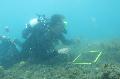
List of participants
By leg :
- POST CAMPAGNE ( - )
- Marani, Gilberto ( Muséum national d'Histoire naturelle)
- Numérisation
- ( - )
- Bouchet, Philippe (Malacologie, Muséum national d'Histoire naturelle)
- Chef de mission
- Bouchon, Claude (Spécialiste des coraux, Université des Antilles et de la Guyane)
- Plongée
- Bouchon, Yolande (Spécialiste des poissons, Université des Antilles et de la Guyane)
- Plongée
- Buge, Barbara (Malacologie, Muséum national d'Histoire naturelle)
- Barcoding moléculaire
- Buske, Yan (Malacologie, Bénévole)
- Plongée
- Caballer, Manuel (Malacologie, Muséum national d'Histoire naturelle)
- Plongée - Collecte
- Chambard, Cyril (Technicien MNHN, Muséum national d'Histoire naturelle)
- Tamisage - Tri
- Charles, Laurent (Malacologie, Muséum d’Histoire naturelle de Bordeaux)
- Collecte - photos mollusques
- Colomb, Jacques (Malacologie, Muséum national d'Histoire naturelle)
- Collecte
- Corbari, Laure (Carcinologie, Muséum national d'Histoire naturelle)
- Responsable tri des crustacés et photo
- De Bettignies, Thibaut (Algologie, Muséum national d'Histoire naturelle)
- Plongée - Collecte
Stations map
 GoogleEarth file (.kml)
List of stations

Taxonomy by access
| Class | Access | Number of reports |
|---|

